
Akihabara was never just a backdrop.
For decades, it has been a stage where fiction and reality constantly collide.
Anime creators have repeatedly chosen Akihabara not only because it looks distinctive, but because the district itself carries meaning: technology, fandom, obsession, creation, and decline all layered into a few dense city blocks.
This article aims for total coverage.
Not selected highlights. Not “famous examples.”
The goal is to document every known anime work in which Akihabara appears—whether as a main setting, a recurring location, or even a brief background cut.
TV series, theatrical films, OVAs—everything is included.
This is a reference you return to years later, when a new streaming service launches or when you suddenly remember an anime scene and think,
“Was that Akihabara?”
How This Guide Is Organized
Each title is examined with the same criteria:
- Official release format and year
- How frequently Akihabara appears
- Real-world Akihabara locations depicted
- How the district is portrayed in the story
- Observations comparing the anime setting with the real city today
This is not a tourism guide.
It is a cultural archive.
- Category A: Anime Fully Set in Akihabara
- Category B: Anime Where Akihabara Appears Repeatedly
- Category C: Anime With Brief or Symbolic Akihabara Appearances
- Your Name (Kimi no Na wa)
- K-On! (Season 2, Final Episode)
- Neon Genesis Evangelion
- Rascal Does Not Dream Series
- The Girl Who Leapt Through Time (2006)
- Weathering With You
- Psycho-Pass (Films)
- 5 Centimeters per Second
- Sword Art Online Alternative: Gun Gale Online (OVA)
- The Disappearance of Haruhi Suzumiya
- March Comes in Like a Lion
- Why Category C Still Matters
- Why Akihabara Keeps Appearing in Anime
- This Archive Will Continue to Grow
Category A: Anime Fully Set in Akihabara
STEINS;GATE
Format: TV series (2011), OVA, theatrical film
Akihabara presence: Constant, central to the narrative
Key locations depicted:
- Old Radio Kaikan
- Electric Town Exit
- UDX area
- Kanda River backstreets
STEINS;GATE is not simply set in Akihabara—it is inseparable from it.
The series reconstructs the district with near-documentary precision. Buildings, signage, pedestrian flow, and even minor shop placements are modeled directly from real locations. This realism anchors the story’s science fiction elements in a tangible space, making the extraordinary feel disturbingly plausible.
What elevates the work further is timing.
The anime preserves a version of Akihabara that no longer exists. The former Radio Kaikan building, demolished and rebuilt years later, appears repeatedly. As a result, the series now functions as an unintended historical archive of early-2010s Akihabara.
For visitors today, the emotional map still aligns—even when the physical one does not.
16bit Sensation: Another Layer
Format: TV series (2023)
Akihabara presence: Frequent and era-dependent
Key locations depicted:
- Electric Town streets
- PC software districts
- Station-front areas across multiple decades
This series approaches Akihabara as a layered historical site rather than a static backdrop.
By shifting between the 1990s and the present day, it documents the district’s transformation from a PC-centric marketplace to a broader pop-culture hub. Storefronts, signage styles, and even street density change depending on the era portrayed.
Unlike typical nostalgia-driven works, the series avoids idealization.
It presents Akihabara as an industry ecosystem—creative, exploitative, innovative, and fragile all at once.
For long-time visitors, the accuracy is unsettling.
For newcomers, it serves as a compressed cultural history lesson.
AKIBA’S TRIP: The Animation
Format: TV series (2017)
Akihabara presence: Constant
Key locations depicted:
- Major electronics retailers
- Gachapon zones
- Side streets and alleyways
Absurdity defines the premise, but geography grounds the execution.
The anime captures mid-2010s Akihabara with remarkable fidelity. Many locations shown have since closed or been repurposed, giving the series retrospective value beyond its original intent.
While the narrative leans heavily into parody, the spatial logic of the city remains intact. Viewers familiar with Akihabara can trace character movement almost block by block.
Akiba Maid War
Format: TV series (2022)
Akihabara presence: Constant
Key locations depicted:
- Central Street
- Maid café districts
This work reframes Akihabara as a battleground.
Beneath the pastel aesthetics lies a brutal commentary on competition, loyalty, and cultural commodification. The district is portrayed as a paradox: cute on the surface, merciless underneath.
Many real-world cafés and shops referenced—directly or indirectly—have since disappeared. The anime unintentionally captures a fading era of Akihabara’s maid culture.

Denki-gai no Honya-san
Format: TV series (2014)
Akihabara presence: Constant
Key locations depicted:
- Doujin bookstores
- Specialty manga shops
This series depicts Akihabara at ground level.
Rather than focusing on spectacle, it follows retail workers navigating fandom, exhaustion, and passion. The environment is intimate—narrow aisles, stacked merchandise, and relentless customer flow.
For those who know the district, the depiction feels less like fiction and more like memory.
Chaos;Head
Format: TV series (2008), OVA
Akihabara presence: Primary setting
Key locations depicted:
- Radio Kaikan
- Central Street
- Shohei Bridge area
Dark, unstable, and claustrophobic.
Akihabara here is not celebratory—it is oppressive. Familiar landmarks become unsettling through framing and color. The contrast between real-world accuracy and psychological horror amplifies the sense that something is wrong.
The series demonstrates how Akihabara can be recontextualized without altering its physical layout.
Lycoris Recoil
Format: TV series (2022)
Akihabara presence: Frequent, structurally important
Key locations depicted:
- UDX
- Central Street
- Kanda River area
Modern Akihabara, rendered with exceptional precision.
The café featured in the series aligns closely with real-world geography, making location mapping unusually straightforward. Repeated use of the same streets reinforces spatial continuity rarely seen in recent anime.
Among contemporary works, this stands as one of the most accurate portrayals of present-day Akihabara.
Di Gi Charat (Entire Franchise)
Format: Multiple TV series and OVAs (1999–2006)
Akihabara presence: Constant
Key locations depicted:
- Gamers main store (fictionalized)
- Late-1990s Akihabara streets
This franchise is foundational.
Long before “Akihabara anime” became a recognized category, Di Gi Charat positioned the district as a character in itself. The setting reflects a transitional era—between electronics town and otaku capital.
Today, it serves as one of the clearest animated records of late-1990s Akihabara.
Comic Girls
Format: TV series (2018)
Akihabara presence: Frequent
Key locations depicted:
- Publishing-related districts
- Manga retail zones
While quieter than other entries, the series links Akihabara to creation rather than consumption. It focuses on artists rather than customers, framing the district as a support structure for creative labor.
Miss Monochrome
Format: Multiple TV seasons
Akihabara presence: Constant
Key locations depicted:
- Event spaces
- Idol-related commercial zones
Akihabara appears as a performance ecosystem.
Stages, promotions, and fan interactions blend into a hyper-commercial loop, reflecting the district’s role in idol culture.
Category B: Anime Where Akihabara Appears Repeatedly
Akihabara is not the sole setting, but returns across multiple episodes or major scenes.
Oreimo: My Little Sister Can’t Be This Cute
Format: TV series (2010–2013), OVAs
Akihabara presence: Multiple episodes
Key locations depicted:
- Akihabara Station area
- Anime and doujin shops modeled after real stores
Oreimo functions as an initiation ritual.
The protagonist’s first serious exposure to otaku culture is framed through Akihabara. The district is depicted as overwhelming, confusing, and slightly intimidating—mirroring the experience of first-time visitors.
What stands out is the accuracy of store density and signage clutter. Even fictional shop names are placed exactly where their real-world counterparts would be. The anime captures the feeling of “getting lost on purpose” that defined Akihabara for many fans in the early 2010s.
Love Live! Series
(Original / Sunshine!! / Nijigasaki)
Format: Multiple TV series and films
Akihabara presence: Frequent, especially Nijigasaki
Key locations depicted:
- Akihabara Station
- UDX
- Atre Akihabara
Few franchises have reshaped Akihabara as visibly as Love Live!.
Rather than simply depicting the city, the series triggered real-world transformations. Station buildings, shopping complexes, and entire streets were rebranded for limited-time collaborations, collapsing the boundary between fiction and commerce.
In Nijigasaki, Akihabara is not just a backdrop—it is a stage. Characters move through spaces already familiar to fans, reinforcing a loop where anime influences the city, and the city feeds back into the anime.
Saekano: How to Raise a Boring Girlfriend
Format: TV series (2015, 2017), film (2019)
Akihabara presence: Multiple episodes and film
Key locations depicted:
- Major doujin shops
- Station-front areas
This series treats Akihabara as a workspace.
Rather than spectacle, the focus is on routine: browsing stores, meeting collaborators, scouting materials. The environment supports creation, not fantasy. Many background shots reproduce real storefront layouts with minimal abstraction.
For aspiring creators, Akihabara appears less as a dreamland and more as a production base.
Bakuman.
Format: TV series (2010–2013)
Akihabara presence: Recurring
Key locations depicted:
- Manga shop districts
- Event spaces inspired by Akihabara
Although not centered on otaku retail culture, Bakuman uses Akihabara to visualize ambition. Scenes set in the district emphasize scale—rows of shops, crowds, and information overload.
Akihabara becomes shorthand for the manga industry’s gravity well: where dreams either gain traction or collapse.
Di Gi Charat Spin-offs and Related Works
Format: TV series, OVAs
Akihabara presence: Frequent across entries
Key locations depicted:
- Gamers main store (fictionalized)
- Late-1990s commercial streets
Beyond the main series, spin-offs repeatedly return to Akihabara as a commercial hub. These works preserve an era when character branding and physical retail were inseparable.
For researchers of otaku history, these entries are primary visual sources.
Stella no Mahou
Format: TV series (2016)
Akihabara presence: Several episodes
Key locations depicted:
- Guarded underpasses
- Bookstore areas
Akihabara appears as a transitional space between school life and creative adulthood. The anime focuses on quiet streets rather than main avenues, emphasizing corners and side paths.
This perspective resonates with visitors who experienced Akihabara beyond Central Street.
Hello!! Kin-iro Mosaic
Format: TV series (2015)
Akihabara presence: Multiple episodes
Key locations depicted:
- Anime shops
- Central Street sidewalks
The depiction is light and observational. Characters wander, shop, and react. Routes taken closely match real pedestrian flow, making scene identification unusually easy.
For casual fans, this is often the first anime where Akihabara feels walkable.
The World God Only Knows: Goddess Arc
Format: TV series (2013)
Akihabara presence: Several episodes
Key locations depicted:
- Station surroundings
- Commercial streets
Akihabara is framed as a domain of genre knowledge. Game shops and signage function as visual shorthand for the protagonist’s mindset.
Background art shows clear familiarity with real shop placement, reinforcing authenticity even in brief scenes.
Dagashi Kashi 2
Format: TV series (2018), OVA
Akihabara presence: One dedicated episode
Key locations depicted:
- Akihabara Station area
- Large electronics retailers
The episode is notable simply because of its premise: searching for traditional candy in Akihabara. The contrast between old-fashioned snacks and hyper-modern retail highlights the district’s cultural layering.
Lycoris Recoil
(Note: overlaps with Category A in frequency, but narrative scope extends beyond Akihabara)
Format: TV series (2022)
Akihabara presence: Recurring
Key locations depicted:
- UDX
- Central Street
- River-adjacent zones
Repeated location reuse reinforces spatial coherence. The anime treats Akihabara as an operational zone rather than a novelty, which is rare in modern action series.
Category C: Anime With Brief or Symbolic Akihabara Appearances
Akihabara appears for a single scene, short sequence, background cut, or as a symbolic reference.
Your Name (Kimi no Na wa)
Format: Theatrical film (2016)
Akihabara presence: Very brief
Scene type: Train passing / background signage
Akihabara appears only for seconds, yet its inclusion is deliberate.
The station name flashes past during a train sequence, functioning as a geographic anchor rather than a setting. For Japanese audiences, the name alone situates the story firmly in contemporary Tokyo.
This kind of usage reflects Makoto Shinkai’s style: cities are not destinations, but emotional coordinates.
K-On! (Season 2, Final Episode)
Format: TV series (2009–2010)
Akihabara presence: One episode
Scene type: Shopping trip
The girls visit Akihabara during a graduation trip. The scenes are light, casual, and observational.
What makes it notable is rarity. Music-focused slice-of-life anime seldom intersect with Akihabara explicitly. The contrast between instruments, character goods, and city noise adds texture to the farewell mood.
Neon Genesis Evangelion
(Original films / background references)
Format: Theatrical films
Akihabara presence: Indirect / symbolic
Akihabara appears not as a location to visit, but as a cultural artifact. Electronics, signage styles, and urban density evoke the district without naming it directly.
In Evangelion, Akihabara represents pre-impact consumer civilization—something already half-lost.
Rascal Does Not Dream Series
(OVA entries)
Format: OVA / film
Akihabara presence: Short scenes
Scene type: Urban transition
Akihabara functions as a passing city layer. Characters move through it without commentary, reinforcing realism rather than spectacle.
This treatment mirrors how locals experience the area: present, but not exotic.
The Girl Who Leapt Through Time (2006)
Format: Theatrical film
Akihabara presence: One reference
Scene type: Train dialogue / station mention
The station name is spoken rather than shown clearly. That alone is enough.
Akihabara works here as a temporal marker—modern Tokyo in the mid-2000s. Its mention signals a specific era of urban Japan.
Weathering With You
Format: Theatrical film (2019)
Akihabara presence: Peripheral visuals
Akihabara appears among other districts as rain-soaked fragments of Tokyo. Neon reflections, signage density, and crowd patterns are recognizable, though not emphasized.
The city exists to be felt, not identified.
Psycho-Pass (Films)
Format: Theatrical films
Akihabara presence: Background / reinterpreted
In near-future form, Akihabara becomes a zone of layered surveillance and digital signage. The layout resembles present-day electric town, filtered through dystopian logic.
Rather than nostalgia, the depiction treats Akihabara as a prototype of future urban density.
5 Centimeters per Second
Format: Theatrical film (2007)
Akihabara presence: Audio reference
Scene type: Train announcement
The station name is heard briefly. That is all.
Yet this minimal inclusion anchors the emotional geography of the film. Akihabara here is not a place to go, but a place passed by—much like the relationships depicted.
Sword Art Online Alternative: Gun Gale Online (OVA)
Format: OVA
Akihabara presence: One short scene
Scene type: Real-world segment
A brief cut shows the protagonist walking through Akihabara before returning to the virtual world. The realism of the background contrasts sharply with the digital battlefield.
This transition reinforces the boundary between play and reality.
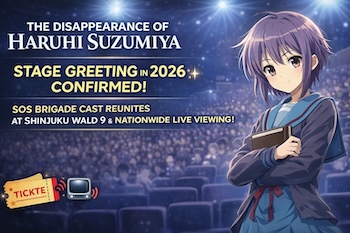
The Disappearance of Haruhi Suzumiya
Format: Theatrical film (2010)
Akihabara presence: Transit-level
Akihabara is glimpsed through train windows as part of an altered worldline. The location itself is unchanged, but its context is not.
For fans, spotting the district becomes part of the puzzle.

March Comes in Like a Lion
Format: TV series
Akihabara presence: Background scenes
Scene type: Neighborhood overlap
Although not labeled, multiple shots near UDX and river-adjacent areas clearly mirror Akihabara’s edges. The city bleeds naturally into the characters’ daily lives.
This understated integration feels authentic.
Why Category C Still Matters
These appearances are easy to dismiss—but collectively, they prove something important.
Akihabara is not only a destination.
It is a visual shorthand.
Directors use it to signal:
- Modernity
- Otaku proximity
- Urban density
- Cultural memory
By documenting even these fragments, the archive becomes complete.
Why Akihabara Keeps Appearing in Anime
Akihabara is not just a location.
In anime, it functions as a shared cultural language.
Creators return to Akihabara again and again—not because it looks flashy, but because it already carries meaning.
1. Akihabara Is Instantly Legible
Akihabara communicates context in seconds.
A single shot of dense signage, electronics stores, or station exits immediately signals:
- contemporary Tokyo
- otaku-adjacent culture
- technology and consumption
- youth-oriented urban life
No exposition is required.
For domestic audiences, it is self-explanatory.
For international viewers, it has become a recognizable symbol through repetition.
This efficiency is why directors use Akihabara even for one-cut appearances.
2. Akihabara Bridges Fiction and Reality
Many anime aim to blur the boundary between fiction and lived space.
Akihabara excels at this because:
- the real district already feels exaggerated
- anime goods exist there physically
- fans can visit the exact locations
When viewers later walk the same streets, the story continues outside the screen.
This is why pilgrimage culture grew around Akihabara earlier than most other districts.
3. Akihabara Represents “Now” (and Sometimes “Then”)
Akihabara adapts to different narrative roles depending on era.
- In 1990s–2000s works, it represents otaku origin culture
- In 2010s series, it reflects commercialized fandom
- In sci-fi and dystopian anime, it becomes a relic of consumer civilization
Because the district has visibly changed over time, anime can use it as a historical marker.
Showing Akihabara in a story quietly tells the viewer when they are.
4. Akihabara Is a Safe Anchor for Experimental Stories
Time loops, parallel worlds, altered timelines—many anime deal with unstable realities.
Akihabara works as an anchor point:
- familiar enough to notice changes
- flexible enough to be reinterpreted
This is why series like STEINS;GATE, Chaos;Head, and The Disappearance of Haruhi Suzumiya rely on it.
If Akihabara feels “off,” the viewer immediately understands that something is wrong.
5. Akihabara Is Not Always the Protagonist—and That’s the Point
The most telling uses of Akihabara are often the smallest ones.
A train announcement.
A passing sign.
A background street corner.
These moments reflect how real people experience the area:
present, ordinary, woven into daily life.
By including Akihabara casually, anime avoids turning it into spectacle—and achieves realism instead.
This Archive Will Continue to Grow
This article is not finished.
Akihabara continues to appear in:
- new TV series
- theatrical films
- OVAs and spin-offs
The goal of this archive is simple:
to document every anime work in which Akihabara appears, regardless of screen time.
Major titles.
Minor references.
Even a single spoken station name.
All of it matters.
↓Click here for anime-related articles↓
・Detective Conan OVA Complete List (2026): All Episodes Explained, Timeline & Canon Status
・Detective Conan Movies: What TV Episodes to Watch Before Each Film
・MyAnimeList Top 50 Anime: A 2026 , I tried to consider it from the perspective of a Japanese geek
・Every Anime Set in Akihabara: The Complete Guide to Japan’s Otaku District in Anime
・The Haruhi Suzumiya TV Anime 20th Anniversary Project ExplainedHaruhi’s SOS Brigade
・Joins Sanrio Virtual Festival 2026: What’s Official, What’s Likely, and How to Watch
・Akiba Maid War Review With No Spoilers|Japanese anime
・Pokémon Lovers, Don’t Miss This! The Ultimate Guide to Japan’s Local Pokémon Across 47 Prefectures
・The 7 Biggest Mysteries About Satoru Gojo That Have Jujutsu Kaisen Fans Buzzing
・Jujutsu Kaisen Hidden References Explained Episodes 1–9, With a Japanese Fan Lens
・Jujutsu Kaisen Hidden References Explained Episodes 10–19, With a Japanese Fan Lens
・Sushiro x JoJo Collaboration Starts in Japan(akihahabara,sendai,koube,OSAKA,TOKYO)
・Demon Slayer Finale Begins! Infinity Castle Arc Hits Japan Amid TV Hype—When Will America and Europe See It?