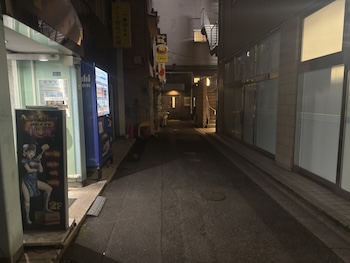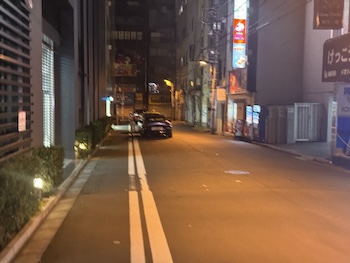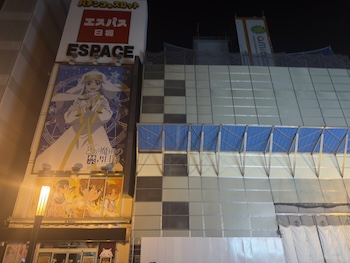
Akihabara is the kind of place where high-rises are covered in colorful signs, and every corner tries to pull you inside. It was once a city built by people who went all-in on their niche obsessions.
But lately, something unsettling has been happening in the Akihabara area.
Not just single storefronts, but entire buildings have been sitting empty. Vacant floors. Vacant towers. Prime locations with the lights turned off.
Cities change. Trends shift. That part is unavoidable.
Still, this time, I cannot help feeling a real sense of loss. And even if all I can do is complain, I think it matters to record what is happening on the ground.
This article is a snapshot of what I saw and felt, mainly around 2021–2022, when the empty-tenant problem became impossible to ignore.
※This article will be a reconstructed article with the latest trends in the articles contributed to akihabara.site in 2022.
A Prime Corner Lot: The Former Volks Akihabara Hobby Tengoku Building
Few spots in Akihabara feel more central than the former Volks Akihabara Hobby Tengoku building.
It is close to JR Akihabara Station, planted on a corner intersection where foot traffic never really stops. From a business perspective, the location should be unbeatable.
It used to be one of the iconic sights that colored Akihabara day and night.
The building itself was instantly recognizable. The lower floors were strongly red, while the upper floors were clean white, making the structure stand out even from far away.
But after becoming vacant around 2021, it stayed that way. The exterior began to look noticeably worn, and if it ever returns in a major way, a full rebuild may be the realistic path.
For me, it ended up symbolizing how Akihabara keeps shedding its old layers. Ishimaru Denki, then newer identities, then emptiness.
That said, one thing about Akihabara is that it sometimes comes back in unexpected ways. Also, Hobby Tengoku 2 is still active, and I still visit. I can easily spend an hour just looking at figure displays. I do not always buy, but I still go. I still like it.
Current situation of Volks Akihabara Hobby Heaven Site
The old Hobiten Building, which stood at the corner of that intersection, was very empty as of 2022. After that, a drugstore entered the lower floor and once restarted as a tenant.However, this change has a strong impression that a different purpose has been inserted into the empty box rather than the return of the hobby system. In addition, there is talk of dismantling and redevelopment, so if it moves in earnest, there is a possibility that the characteristic appearance itself will disappear. This is a point that symbolizes the change in Akihabara, and it is worth adding to the 2022 article.
Seven Floors With No Answer: The Former SEGA Akihabara GiGO Site
Another painful example is the building that used to be known as SEGA Akihabara GiGO.
At one point, the glass facade carried huge character visuals, and it felt like a billboard of Akihabara’s energy. The location is excellent, just like the spot above.
And yet, the building became the kind of space where you look up and realize floor after floor is empty.
As of the time I was watching this situation, there was no clear new tenant information. A building of that size means the rent is not small. I even saw posts online claiming the monthly rent was once over ten million yen and later dropped dramatically. I cannot verify those numbers, but the fact that people were discussing them at all tells you how heavy the burden is.
The part that shocked me most was the implication: if the rent really was that high, then the businesses running there before had to generate serious profit to survive.
I want this building to come back to life quickly, because it still carries the atmosphere of older Akihabara.
Current situation of the former site of Sega Akihabara GiGO
In 2022, the atmosphere that was difficult to decide the next one when the large box tenants were empty, continued for a while after that. On the other hand, there are movements that cannot be said to have completely ended the amusement system in Akihabara.Specifically, after the GiGO Akihabara Building No. 1 closed, it was restarted as a different brand amusement facility. After all, the prime location of Akihabara is still in demand as a box for people to play. While there are points that sink in the empty space, there are also points that re-ignite while maintaining the purpose. That mixture is the reality now.
A Cultural Shock: Toranoana Closed Everywhere Except Ikebukuro
In late August 2022, news spread fast online and on TV.
Toranoana—a name tied to doujin culture and Akihabara memories—would close all physical stores except the Ikebukuro location.
On social media, the reactions were emotional. People described it as a place where they spent their youth. Others thanked the store for years of service and said goodbye like they were losing a piece of their personal history.
The company’s direction made sense from a business standpoint. They planned to expand their mail-order and online operations, which had already been strong.
Still, every time I see the easy argument—Do we even need real stores anymore when Amazon and large marketplaces can deliver anywhere—I feel like the question is missing the point.
Akihabara is not just a distribution system. It is a physical culture.
When you remove the physical spaces, you do not only change how people buy things. You change the kind of city it is allowed to be.
The current situation on the Akihabara side after the withdrawal of Toranoana
The withdrawal of Toranoana was one of the events that determined the atmosphere of 2022. The impact of the closure itself is also great, but what is more serious is that it has visualized the flow of doujin distribution in Akihabara away from physical stores.After that, in Akihabara, there was also a movement of large stores by another brand, and it seems that anime retail is re-consolidating while changing shape. However, what is happening here is not about the return of the same culture. It is a process in which the center of the culture handled by Akihabara is being reorganished, and the role that Toranoana played is not simply replaceable. The blank space after withdrawal is heavier than the number.
Why Vacant Tenants Keep Appearing in Akihabara
Vacant buildings in Akihabara are a painful sight, especially if you remember the older era.
Maybe this is partly the perspective of people who knew Akihabara when the signs felt louder and the storefront windows felt more alive. But the nostalgia is real, and it is not limited to a small group.
When I walk today, the emptiness hits me hard. At the same time, I also feel something else: new stores do appear. The city is not purely collapsing. It is shifting in uneven waves.
The bigger background is obvious.
Online shopping was already dominant. Then the world entered a period where people reduced movement and avoided crowds. That kind of pressure naturally accelerates business model changes. Some companies adapt. Some give up physical space. Some move their identity online.
However, I do not think the situation is purely hopeless.
Even industries that were supposed to be trapped in a paper-era model—like parts of publishing—found ways to survive and even grow. That suggests the problem is not simply that physical culture is impossible. It means the physical format has to justify itself in new ways.
And if anime and games continue to function as global export engines, then Akihabara still has the potential to ride that energy again—if it can create spaces that people want to visit, not just places that sell products.
That is the future I want to see.
What has changed now from the lament of 2022 ?
Akihabara has certainly increased availability. However, it is not a completely sunken city. The place that is not filled will continue to remain unfilled. However, in another place, the power to try to move even if the purpose is changed. The mixture is the reality of Akihabara now.
My Take
At the time of 2022, the number of vacant tenants in Akihabara had increased visibly. However, as time goes by, the city stubbornly changes shape. Here, I will add changes that can be confirmed as of 2026 for the representative examples mentioned in the article at that time. Because I don’t want to end with pessimism alone, I want to leave it as a movement that happened in reality.
Quotation and reference
I quoted and referred to the information from this article.
We deeply consider and experience Japanese otaku culture!
[Why did this happen?] Considering that there are too many vacant tenants in Akihabara, the problem is getting serious. I actually visited|akihabara.site Official
All Write: Kumao
↓Please dig deep into Akihabara-related articles!↓
Akihabara Timeline (1990–2019): How Tokyo Became the World’s Top Otaku City
Tokyo’s Most “Moe” Week: Why Kanda Matsuri + Atre Akihabara Hits Different
Akihabara People Watching: Strange Voices from a Quiet Cafe
Akihabara Travel Story: The Anime Umbrella Theft That Froze the Room
Travel Story: The Anime Umbrella Theft That Froze the Room
Akiba Maid War Review With No Spoilers|Japanese anime
Akihabara vs Ikebukuro |Two Otaku Capitals, Two Completely Different Rulebooks
Recommended Women’s Complete Guide | Ikebukuro and Akihabara Street Walking Saved Version
Introducing the trends and stores of Akihabara ramen shops.
Akihabara Lucky Bags 2026
Is Akihabara Past Its Prime? Inside the now Shift of Japan’s Otaku Capital
Akiba Shrines: Between Circuits and Silence — The Hidden Spiritual Layer of Tokyo’s Electric Town
Akihabara: From Radio Parts to Otaku Sanctuary—A Journey Through Japan’s Electric Town