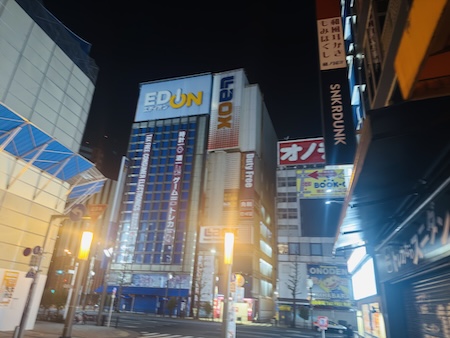
The strange, perfect overlap where tradition and otaku culture don’t fight—they simply stack
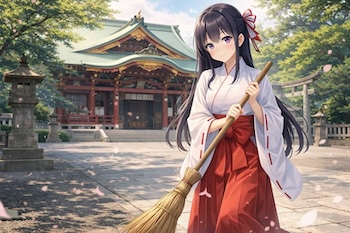
The miracle intersection: Kanda Matsuri walking straight through Akihabara
There’s a scene in Tokyo that sounds like something you’d invent for a story: you walk through Akihabara’s electric town, and a mikoshi suddenly appears.
A portable shrine. In Akihabara.
What’s surprising is how many people don’t know this is real.
Kanda Matsuri is one of Edo’s three major festivals, and year after year it still passes through Akihabara. You’ll see happi-clad carriers stepping into narrow lanes lined with electronic parts stores. You’ll hear drums sliding past maid cafés. You’ll notice tourists holding idol goods and fans in character T-shirts looking up quietly—watching something old and serious move through a place that’s usually all neon and fandom.
And the key point is this: in Akihabara, tradition and “now” don’t collide. They overlap.
Kanda Myojin has watched Akihabara change since the postwar era. The neighborhood shifted from radio gear and components to PCs, doujin culture, figures, and games, but the sacred space stayed. On festival days, shopping streets and mikoshi share the same frame. Mikoshi routes push into places people associate with modern Akihabara—Chuo-dori, Shohei Bridge, even the edges of Junk Street—until the festival sound and the electric glow sit on top of each other.
Inside the shrine grounds, you can find classic ema side-by-side with character-themed ema, including “ita-ema” style art boards and modern offerings tied to online creators. What’s striking is not that it exists—but that nobody laughs. Nobody rejects it. It just… belongs.
Akihabara is a place where mikoshi, anime fandom, prayers, shrine maidens, uniforms, and cosplay-adjacent fashion can occupy the same street without needing to merge into one thing. They remain different, and they remain neighbors.
Kanda Matsuri doesn’t “change” Akihabara. It reveals what Akihabara already is. You see a maid staff member watching the drums go by. You see students looking up at the carriers’ backs. In that moment, everyone is an Akihabara local—even if they arrived yesterday.
The 2023 shock: Hololive x Kanda Matsuri
The moment people started calling the festival situation in Akihabara “abnormal” (in the best way) was 2023, when the collaboration with Hololive became a major topic.
A virtual idol presence tied to a real shrine festival is not a small concept. It wasn’t just a poster or a single campaign. The collaboration expanded into designs, festival-linked visuals, and official goods. Atre Akihabara itself shifted atmosphere—parts of the building and internal presentation moved into a Hololive tone, changing what the area felt like during that period.
This mattered because it didn’t feel like a cheap promotion.
What happened looked more like coexistence: religious ritual and V-culture standing in the same place without awkwardness.
For fans, an “oshi” inside a screen can be daily emotional support. For a shrine, faith is built over long time in a physical location. In most cities these two things would clash, or at least be treated as incompatible.
In Akihabara, they crossed directly—and nobody tried to shut it down.
Whether the object of prayer is a deity or an idol, the act is the same: people place their feelings somewhere. That’s the core idea Akihabara quietly makes visible.
As of 2025, there are also rumors and chatter about new movements involving Hololive or other VTubers. Nothing here should be treated as confirmed unless officially announced, but the pattern is clear enough that many fans feel the “resonance” might return—digital gods and an old sacred ground, meeting again.
Atre Akihabara evolving into a “moe shrine” space
In spring 2025, attention is gathering again around Atre Akihabara’s Kanda Matsuri collaboration, with talk that the staging will lean even more deliberately into shrine-like presentation.
Atre has already built a track record of collaborations that treat “oshi” as something closer to a sacred presence than a product. Past tie-ins—Hololive, and also titles like The Apothecary Diaries—filled the station building with life-size panels, layered decorations, and guided-style messaging. The result was strange in a very Akihabara way: a normal daily space temporarily wearing the atmosphere of a place of devotion.
This year’s biggest rumor is the one people can’t stop imagining: a limited-time miko café–style booth.
There has not been a formal announcement at the time of writing, so this must be treated as speculation. But the reason it spreads so easily is that the “visual” already feels plausible in Akihabara.
People can already picture it:
A VTuber panel in miko clothing, and visitors instinctively putting their hands together.
A “dedication zone” for oshi ema boards.
A mikoshi-motif display on a staircase landing.
None of it feels alien here. It feels like something Akihabara would simply accept as part of the season.
Atre is no longer just a shopping center. It’s becoming a hybrid space where fandom and prayer-like behavior can share a building.
For many people walking through Akihabara now, wishing quietly in front of a shrine space while thinking about an oshi is starting to feel… normal. Digital idols and traditional prayer blend, and nobody needs to comment on how unusual that is.
A personal field note: quiet “oshi prayer” on a rainy Akihabara day
This is personal.
One day, with Kanda Matsuri approaching, Akihabara was covered in light rain. The streets were subdued. Fewer umbrellas than you’d expect. The city felt like it was holding its breath.
Atre’s exterior carried a huge promotional display for The Apothecary Diaries. Inside, life-size panels stood in a calm line—like figures placed carefully in a space that wasn’t just advertising, but something closer to a shrine display.
I walked past them pretending it was casual.
Inside, I was making a wish.
I hope more people find akihabara.site.
It was an “oshi prayer,” just aimed at a site instead of a character.
And while making that wish, I realized something: Akihabara itself has become a container for people’s feelings. It carries them gently without demanding an explanation.
And then I caught myself thinking:
What is this corner of my life, exactly?
The real strength of Kanda Myojin
Kanda Myojin is not only a historic shrine. For Akihabara, it has also become a flexible sacred space that stays close to cultural change.
This shrine became known for introducing IT-related prayers early in Japan. Engineers and business people visit and quietly pray for the safety of devices, systems, and services. During doujin event seasons, you can also see circle participants coming to pray for success. The visit becomes part of creation itself, not separate from it.
In recent years, offerings connected to VTubers and esports names have appeared as well. People who place their emotions into “screen-side” existence also want to anchor those feelings somewhere physical. The shrine gives them a place to do it.
By 2025, multiple activities and collaborations are still in motion, and people from anime and game industries continue to visit quietly. Under the loud surface of Akihabara, wishes keep stacking up.
What Kanda Matsuri means specifically for Akihabara
The festival route has a very clear relationship with subculture corridors.
In the past, mikoshi passing near Akihabara could feel like a side-route—something you’d only notice if you happened to be there. But the path and the “cultural overlap” footprint have gradually widened.
Areas around major redeveloped spots—places people reference through landmarks like the former Gundam Café—shift their seasonal look. Neighborhood groups tied to streets now associated with esports cafés also participate. Routes that connect behind “maid street” style zones and run toward Kanda Myojin have become easier to imagine as part of one continuous cultural map.
Everything sits in the middle ground between tradition and modern content culture, without either side needing to erase the other.
If Akihabara has one defining trait, it’s this: high tolerance for culture.
It doesn’t throw away the old.
It doesn’t over-worship the new.
It lets things exist as they are, side-by-side.
That’s why a festival like Kanda Matsuri feels strangely natural here.
Future predictions: what might happen next (and what is pure imagination)
I’ll separate this clearly.
Prediction 1: another large Hololive-scale linkage could return
Festival goods like happi coats and tenugui with Kanda Matsuri styling could appear again. A fresh miko-themed illustration displayed near the shrine entrance is easy to imagine because it already matches the logic of past collaborations.
Prediction 2: maid-related businesses could lean in
If shops placed mini mikoshi displays, or set up photo moments, it would fit. Even something like a “miko-inspired service day” would instantly read as Akihabara seasonal language.
Prediction 3: an expanded mikoshi parade presence on Chuo-dori (wishful thinking)
This is where imagination starts. But part of Akihabara’s charm is that the line between “possible” and “no way” shifts over time.
You can picture a float moving slowly with VTuber audio playing—fans waving, the city treating it as a festival feature. You can also picture something happening to Atre’s exterior again—because that building has become a visual stage.
Pop-up stores are likely in some form, though content is unknown.
I don’t know where reality ends and fantasy begins here.
But Akihabara is the kind of place that sometimes steps over that border.
That’s the expandable nature of Kanda Matsuri in this neighborhood—and the fun of Akihabara as a cultural zone.
“Oshi prayer” and Akihabara
In Akihabara, fandom sometimes takes a shape close to faith.
A young man bows deeply toward a panel.
An ita-ema board covered in handwriting wishing for an oshi’s health.
Groups gathering at Kanda Myojin to do a joint visit around a birthday.
You can dismiss it as “otaku behavior.”
But I think it’s more useful to recognize it as a new form of prayer.
Many people today don’t place their hearts into physical idols. They place them into digital existence—an oshi who lives on screens, in streams, in updates. They find daily encouragement there, sometimes even rescue. And they treat that presence as something worth wishing for.
Akihabara is where that emotion can surface without apology.
Kanda Myojin is where that emotion can land in the physical world.
This structure may become one of the clearest indicators for how future urban culture works: a city that allows devotion to take new shapes without forcing it to be “proper.”

The author’s point of view
I want to think again about what it means that Kanda Matsuri—tradition—and Akihabara—edge-of-now—share the same week.
To me, Kanda Matsuri is not only about preserving the past.
It’s a structure that changes form while staying serious.
A mikoshi moving through maid streets.
A shrine guide voice sounding like anime.
People walking with the intensity of festival participants, but also with the intensity of fans.
I don’t think this is “fusion.”
It’s not tradition becoming modern, or modern culture becoming tradition.
It’s a system that helps people affirm the present.
Akihabara used to feel like a place that preserved something.
It doesn’t feel like that anymore.
Now it feels like a place that connects cultures.
So when Kanda Matsuri returns here again, “oshi prayer” will probably return too—shaped slightly differently, but still natural.
Some people who protect tradition may feel discomfort with these overlaps. That disagreement may be real. But I also think participation has more than one form—and showing respect through the way you engage can also be a kind of participation.

All Write: Kumao
↓Please dig deep into Akihabara-related articles!↓
Tokyo’s Hidden Barrier:The Urban Legend of the Yamanote Line and the Spirit of Taira no Masakado
Akihabara Timeline (1990–2019): How Tokyo Became the World’s Top Otaku City
Akihabara People Watching: Strange Voices from a Quiet Cafe
Akihabara Travel Story: The Anime Umbrella Theft That Froze the Room
In 2022, when Akihabara was full of vacant tenant → Verify what happened nowAkihabara Travel Story: The Anime Umbrella Theft That Froze the Room
Akiba Maid War Review With No Spoilers|Japanese anime
Akihabara vs Ikebukuro |Two Otaku Capitals, Two Completely Different Rulebooks
Recommended Women’s Complete Guide | Ikebukuro and Akihabara Street Walking Saved Version
Introducing the trends and stores of Akihabara ramen shops.
Akihabara Lucky Bags 2026
Is Akihabara Past Its Prime? Inside the now Shift of Japan’s Otaku Capital
Akiba Shrines: Between Circuits and Silence — The Hidden Spiritual Layer of Tokyo’s Electric Town
Akihabara: From Radio Parts to Otaku Sanctuary—A Journey Through Japan’s Electric Town