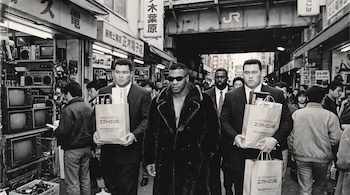
Few figures in modern sports entertainment command as much visceral intrigue as “Iron” Mike Tyson. With blockbuster streaming releases and archival retrospectives once again thrusting the undisputed heavyweight icon back into the global spotlight, combat sports historians inevitably trace his career arc back to one fateful winter afternoon in Japan: February 11, 1990, inside the Tokyo Dome.
Tyson arrived in Tokyo carrying an unblemished 42-0 professional record. What unfolded against 42-to-1 underdog James “Buster” Douglas remains the single greatest upset in boxing history—a brutal tenth-round knockout that shattered the champion’s aura of invincibility. Behind that historic collapse lay an unhinged, sleepless campaign of nightlife indulgence across Tokyo’s bubble-era luxury districts.
Over the years, fringe internet speculation and subculture forum chatter warped these accounts into bizarre modern folklore: “Did Mike Tyson terrorize Tokyo maid cafes during his title defense? Did the Baddest Man on the Planet stalk the alleys of Akihabara incognito?”
Let us settle the chronology immediately: In February 1990, there was not a single frilled apron, cat-ear headband, or “Welcome home, Master!” maid cafe anywhere on the map of Akihabara.
Here is the unfiltered reality behind Tyson’s Tokyo “maid” escapades, paired with an engineering look at what Tokyo’s electronics district actually looked like while the heavyweight champion was exhausting himself in his suite.
The Hotel Okura Truth: Translating Tyson’s “Maids”
How did the word maid become entangled with Mike Tyson’s 1990 trip to Japan? The answer comes straight from Tyson himself in his candid autobiography, Undisputed Truth.
Arriving in Japan roughly a month before the scheduled bout, Tyson completely wrote off Buster Douglas as a threat. Intensive sparring sessions took a backseat to non-stop late-night expeditions across Roppongi and Ginza, fueled by high-end nightlife and unrestrained hospitality. Back at his personal sanctuary inside the prestigious Hotel Okura—then the undisputed gold standard of Tokyo luxury hospitality—Tyson turned his quarters into a chaotic endurance ring.
The “maids” in question were not cosplay cafe hostesses serving decorated omelet rice. They were professional hotel housekeepers employed by the Okura. Armed with an American Express Platinum Card—a payment instrument virtually unheard of in consumer-level Japan at the time—Tyson showered staff with high-end gifts and propositioned the housekeeping crew room by room. As he brutally reflected in his memoirs, he spent his pre-fight training camp indulging in physical marathons behind closed doors rather than preparing for a championship defense.
By the time fight night arrived, Iron Mike had burned through his energy reserves long before stepping between the ropes. He entered the ring visibly sluggish, struggled to time Douglas’s rangy jab, and ultimately ended up crawling on the Tokyo Dome canvas, blindly groping for his dislodged mouthpiece.
1990 Akihabara: Zero Moe, Pure Hardware
While Tyson was tearing through Roppongi, what was happening just a few train stops away along the Sobu Line? The first recognized authentic maid cafe in world history, Cure Maid Café, did not open its doors until 2001. In February 1990, Akihabara had no anime billboards, no costumed street promoters, and no concept of modern otaku character branding.
Instead, the district operated as a gritty, smoke-filled post-war electronics corridor defined by three foundational pillars:
1. The Train Arch Bazaars: The narrow passageways of Radio Center and Radio Department crammed floor-to-ceiling with vacuum tubes, variable resistors, soldering irons, and surplus military radio components.
2. Heavy Consumer Electronics: Storefront sidewalks packed with giant cathode-ray tube (CRT) color televisions, chunky S-VHS video tape decks, and heavyweight portable boomboxes.
3. Duty-Free Wholesale Trading: Overseas corporate procurement buyers haggling over bulk shipments of Japanese appliances at veteran retailers like Laox and Rocket.
The streets smelled of rosin flux, machine oil, and cigarette smoke. It was a no-nonsense industrial commercial zone built entirely for engineers, tinkers, and hardware specialists.
To understand the structural progression that eventually shifted this industrial hub into a global pop-culture powerhouse, explore our historical retrospective on Old Akihabara vs Today.

Structural Contrast: 1990 Bubble Luxury vs. Akihabara Workbench
To visualize the vast cultural gap separating Mike Tyson’s VIP stomping grounds from the everyday reality of Tokyo’s tech corridor during the height of the economic bubble, compare the two ecosystems side by side:
| Comparison Vector | Tyson’s Tokyo (Roppongi & Hotel Okura) | 1990 Akihabara Electric Town |
|---|---|---|
| Target Demographic | Global elites, corporate moguls, and nightlife celebrities | Radio hobbyists, electrical engineers, and hardware buyers |
| Currency & Payment | American Express Platinum Cards and thick stacks of 10,000-yen notes | Strictly Cash Only (Coins and wrinkled paper notes) |
| The Meaning of “Maid” | Professional hotel housekeepers cleaning VIP suites | Non-existent (Concept did not debut until Cure Maid in 2001) |
| Atmospheric Odor | Expensive French perfumes, vintage champagne, and cigar smoke | Hot soldering rosin, machine oil, and cigarette smoke |
| Primary Cultural Driver | Late-stage Bubble Economy excess and VIP privilege | The dawn of the PC-98 and DOS/V microcomputing boom |
Alternate History: What If Iron Mike Walked Into 1990 Akihabara?
Ironically, during the winter of 1990, millions of teenagers worldwide were regularly facing off against Mike Tyson on Nintendo’s Famicom console via the timeless classic Mike Tyson’s Punch-Out!! (1987). Video game culture had already immortalized him as an untouchable final boss.
What would have happened if Tyson, surrounded by his entourage of massive bodyguards, had skipped the nightclubs of Roppongi and detoured directly into the claustrophobic alleys under the Akihabara train tracks?
🥊 Mid-February 1990: Akihabara Radio Center, 1.2-Meter Alleys
Tyson (100kg of sculpted muscle draped in a custom Gianni Versace fur coat):
“Man, Tokyo is boring when you aren’t partying. Hey Don, what is this bunker? The ceiling is four inches above my head and the whole place smells like melted wires.”
Lead Security Guard (6’5″ bodyguard, wedged sideways between component counters):
“Boss, this is the Akihabara electronics bazaar. The corridors are too narrow. We can’t maintain standard protective escort formation without knocking over boxes of capacitors!”
Tyson (Spotting a stack of Sony 8mm Handycam camcorders and glow-in-the-dark audio vacuum tubes):
“Hey old man! Pack up that entire shelf of video cameras and vacuum tube amps. Put it on the Amex Platinum and have it shipped to the presidential suite at Hotel Okura right now!”
Veteran Shop Owner (Pushing reading glasses down his nose, carefully resting a hot 40W soldering iron on its metal stand):
“…Huh? What are you shouting about in English, kid? Credit card? Don’t be stupid! We don’t take plastic here. Cash only! Japanese Yen only!!”
Tyson (Bewildered, tapping the platinum card on the glass display case):
“What? Do you know who I am? I’m Iron Mike! The undisputed heavyweight champion of the world!”
Veteran Shop Owner (Forehead veins bulging, brandishing an adjustable wrench):
“Champion? Don’t care if you’re a champion or a bowl of ramen! This is a cash counter! And stop blocking the entire aisle with that massive coat. If you aren’t paying in bills, get the hell out of my shop! Out!”
Tyson (Backing up into the street, genuinely stunned):
“In Ginza and Roppongi, everyone drops to their knees the second this card hits the table. What kind of strange planet is this place? Forget it, let’s head back to the Okura. At least the housekeeping crew is happy to see me…”
While high-end department stores and Roppongi establishments catered to cash-splashing VIPs during the bubble era, Akihabara’s shopkeepers operated under strict artisan pride. To an old-school parts merchant rewiring a shortwave receiver, a heavyweight boxing champion was simply an obstruction blocking paying customers from reaching the resistor bins.
For an exhaustive look into how Akihabara navigated this pivotal transition into personal computing and early gaming culture throughout the decade, consult our cultural breakdown on Why Akihabara Became the World’s Strongest Fandom City: 30 Years of Tokyo Otaku History.

Kumao’s Take: The Convergence of Two Different Tokyos
February 1990 was a unique moment where two entirely different currents of Japanese urban history ran in parallel without ever touching.
In the luxury suites and glittering discotheques of Roppongi, the world’s most dominant athlete fell victim to late-bubble overconfidence and sensory overload. Meanwhile, just a few kilometers away in the unvarnished alleys of Akihabara, hardware engineers and tech enthusiasts were quietly laying the groundwork for the microcomputing revolution—preparing for the incoming explosion of DOS/V machines, custom desktop PC rigs, and early PC-98 software ecosystems.
Mike Tyson never encountered a maid cafe character in 1990 because that world had yet to be invented. But had someone dragged him away from his luxury hotel suite and dropped him into a smoky Akihabara parts bazaar, a fiery verbal thrashing from a veteran electronics merchant might have been the exact reality check he needed to wake up before Buster Douglas stepped into the Tokyo Dome ring.
Written by Kumao
References / Sources