Tokyo is often described as a hyper-modern megacity, but beneath its railways and office towers lies a deep layer of myth and spiritual folklore.
One of the most enduring urban legends claims that modern Tokyo was designed around a spiritual barrier—a protective formation meant to pacify the vengeful spirit of a legendary samurai: Taira no Masakado.
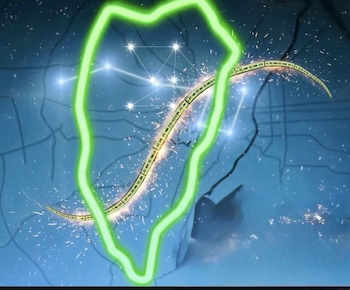
According to this story, the Meiji government unknowingly preserved (or disrupted) an ancient geomantic seal when constructing the Yamanote Line, Tokyo’s iconic circular railway.
True or not, this legend has become part of Tokyo’s cultural DNA.
- Who Was Taira no Masakado?
- The Seven Shrines and the Big Dipper Barrier
- The Seven Spiritual Sites (Urban Legend Route)
- Kanda Myojin (Kanda Shrine) — Protector of Edo, and modern Akihabara
- Waseda Mizuinari Shrine — Water, purification, and a “healing spring” story
- Torikoe Shrine — Old downtown festival energy (Edo commoner culture)
- Tsukudo Shrine — Masakado-linked origin story (940) and relocation history
- Yoroi Shrine — “Armor” legends and Masakado association
- Inari Kio Shrine (Inari Kiō Jinja) — “Kio” is rare, and the Setsubun style is unique
- Masakado Kubizuka (Masakado-zuka) — the core “respect zone” in Otemachi
- The Yamanote Line: Breaking or Reinforcing the Barrier?
- Why This Legend Still Matters
- How to Use This as a Travel Experience
- Final Note for Overseas Readers
Who Was Taira no Masakado?
Taira no Masakado was a 10th-century samurai who rebelled against the imperial court and briefly declared himself ruler of eastern Japan.
After his defeat, his severed head was said to have flown to what is now Tokyo, refusing to decay and causing disasters wherever it rested.
Fearing his wrath, locals enshrined him—and over centuries, Masakado transformed from rebel to protective spirit.
Even today, construction accidents and corporate scandals around his grave are whispered about in Tokyo.
The Seven Shrines and the Big Dipper Barrier
The legend claims that seven key shrines and spiritual sites were deliberately positioned to mirror the Big Dipper (Hokuto Shichisei) constellation.
In East Asian cosmology, the Big Dipper is associated with:
- Protection
- Judgment
- The control of chaotic spirits
By aligning shrines along this celestial pattern, Edo-period planners supposedly created a spiritual containment fieldaround Masakado’s influence.
The Seven Spiritual Sites (Urban Legend Route)
Kanda Myojin (Kanda Shrine) — Protector of Edo, and modern Akihabara
Kanda Myojin is one of Tokyo’s best-known shrines and is traditionally regarded as a guardian shrine for central Tokyo—including the Akihabara area. One of its three major enshrined deities is Taira no Masakado, a historical rebel who later became revered in local belief rather than treated as a mere “curse.”
Why it matters (for the legend):
In urban-legend storytelling, Kanda Myojin often represents the idea of appeasement—turning fear into protection.
Access:
About a 5-minute walk from JR Ochanomizu Station (Hijiribashi Exit). About a 7-minute walk from JR Akihabara Station (Electric Town Exit).
Waseda Mizuinari Shrine — Water, purification, and a “healing spring” story
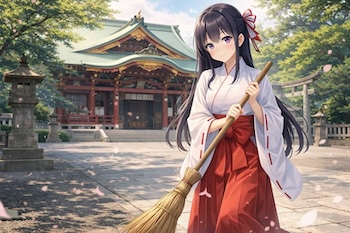
Waseda Mizuinari is a compact shrine in Nishi-Waseda. The shrine’s name is commonly linked to stories of sacred water—a spring said to have drawn attention in the Edo period, becoming part of its local identity.
Why it matters (for the legend):
If you frame the “barrier” story, Mizuinari naturally fits the role of cleansing / overflow control—a purification node in the system.
Access:
Nishi-Waseda / Waseda area. (Common access examples: Waseda Station (Tozai Line) ~10 min walk, Omokagebashi (Toden Arakawa Line) ~3 min walk.)
Torikoe Shrine — Old downtown festival energy (Edo commoner culture)
Torikoe Shrine is famous for its local festival atmosphere and the community-driven feel of old Tokyo neighborhoods. Its grand festival is known for dramatic processions and strong “matsuri” identity.
Why it matters (for the legend):
In a narrative sense, Torikoe is perfect as a “living node”—a place where human energy, noise, and ritual keep the city’s spiritual story “active.”
Access:
Common station approaches include Kuramae Station (Toei Asakusa Line) and Asakusabashi Station (JR/Toei), among others.
Tsukudo Shrine — Masakado-linked origin story (940) and relocation history
Tsukudo Shrine is one of the locations frequently tied to Masakado-related tradition. Tourism/heritage descriptions commonly note an origin story dating to 940, connected to enshrining Masakado and the name “Tsukudo.” It also has a complex relocation history across centuries.
Why it matters (for the legend):
Urban-legend writers often cast Tsukudo as a hinge / pivot point in the “formation”—a quiet junction with heavy historical flavor.
Access:
Near Kudanshita Station (example: Exit 1, short walk).
Yoroi Shrine — “Armor” legends and Masakado association
Yoroi Shrine (in Kita-Shinjuku) is explicitly tied to “armor” lore. Local heritage notes describe traditions such as armor being stored/buried here, with one famous strand associating that story with Masakado.
Why it matters (for the legend):
This is an easy “symbol node”: armor = protection. For English readers, it’s a clean hook: “a shrine where armor legends linger.”
Access:
Area between JR Okubo and Higashi-Nakano (common guidance: ~11 min from Okubo; ~14 min from Higashi-Nakano).
Inari Kio Shrine (Inari Kiō Jinja) — “Kio” is rare, and the Setsubun style is unique
Inari Kio Shrine stands at the edge of Kabukicho / Higashi-Shinjuku. Official/heritage descriptions emphasize that it is unusual for carrying the name “Kiō” (鬼王) and that the shrine has distinctive local traditions (including a notable Setsubun approach in some descriptions).
Why it matters (for the legend):
If your article needs a “demon-warding” role, this spot fits perfectly—without you having to invent anything. It naturally reads as apotraic (evil-averting) in Western storytelling terms.
Access:
About a 3-minute walk from Higashi-Shinjuku Station (Fukutoshin / Oedo lines).
Masakado Kubizuka (Masakado-zuka) — the core “respect zone” in Otemachi
Masakado-zuka (often explained as Masakado’s memorial mound) sits in the Otemachi business district. Tourist/heritage sources describe it as a site associated with mourning/appeasing Masakado’s spirit, and it’s widely treated with a careful, respectful tone in modern Tokyo culture.
Why it matters (for the legend):
This is the “heart” of your story—the place that makes readers go: “Wait, this is in the middle of Tokyo’s finance district?”
Access:
Very close to Otemachi Station (example guidance: near C5 exit).
The Yamanote Line: Breaking or Reinforcing the Barrier?
Here’s where the legend takes a modern twist.
When the Meiji government built the Yamanote Line, they:
- Created a perfect rail circle
- Cut across several spiritual lines
- Encircled central Tokyo
Some say the railway disrupted the ancient seal.
Others argue it unintentionally reinforced the barrier, modern steel replacing ritual lines.
Either way, Tokyo’s most important train line now mirrors the same circular logic as the spiritual defense.
Coincidence—or continuity?
Why This Legend Still Matters
This story isn’t about believing in ghosts.
It’s about how Japan blends history, spirituality, and urban design:
- Shrines coexist with offices
- Myths survive modernization
- Cities are built with memory, not just concrete
For travelers, this legend adds a hidden layer to everyday sightseeing—especially in Akihabara, Otemachi, and central Tokyo.
How to Use This as a Travel Experience
If you’re visiting Tokyo:
- Combine shrine visits with normal sightseeing
- Walk parts of the Yamanote Line with this story in mind
- Treat it as cultural folklore, not superstition
You’ll never see Tokyo the same way again.

Final Note for Overseas Readers
This article introduces a popular Japanese urban legend, not a historical fact.
However, legends like this reveal how Japanese society thinks about space, memory, and respect for the past.
And that alone makes the story worth knowing.

All Write: Kumao
↓Please dig deep into Akihabara-related articles!↓
Old Akihabara vs Today: What the PC-98 Era Was Really Like
Akihabara Timeline (1990–2019): How Tokyo Became the World’s Top Otaku City
Akihabara People Watching: Strange Voices from a Quiet Cafe
Akihabara Travel Story: The Anime Umbrella Theft That Froze the Room
In 2022, when Akihabara was full of vacant tenant → Verify what happened nowAkihabara Travel Story: The Anime Umbrella Theft That Froze the Room
Akiba Maid War Review With No Spoilers|Japanese anime
Akihabara vs Ikebukuro |Two Otaku Capitals, Two Completely Different Rulebooks
Recommended Women’s Complete Guide | Ikebukuro and Akihabara Street Walking Saved Version
Introducing the trends and stores of Akihabara ramen shops.
Akihabara Lucky Bags 2026
Is Akihabara Past Its Prime? Inside the now Shift of Japan’s Otaku Capital
Akiba Shrines: Between Circuits and Silence — The Hidden Spiritual Layer of Tokyo’s Electric Town
Akihabara: From Radio Parts to Otaku Sanctuary—A Journey Through Japan’s Electric Town