
- Akihabara at a Crossroads
- Current Reality: Akihabara as a Layered District
- When Anxiety Spreads Online: Safety, Manners, and the Reality on the Ground
- Drawing Boundaries, Not Excluding: A Practical Direction for the District
- Has Women’s Fandom Really Moved to Ikebukuro?
- Foreign Visitors and the Gap in Expectations Around Concept Cafés
- Related considerations
- Author’s Note
Akihabara at a Crossroads
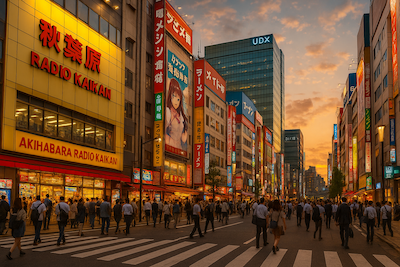
In 2024, Japan recorded its highest number of inbound visitors on record, with approximately 37 million foreign tourists entering the country and total spending exceeding ¥8.1 trillion. Tokyo’s major districts filled up again, and Akihabara was no exception. Along Chuo Dori, overseas travelers, office workers in suits, and everyday shoppers now share the same streets. Step into the backstreets, however, and the atmosphere shifts sharply into a dense maze of concept cafés and highly specialized stores.
The pace of change has been relentless. Memories of a “nostalgic Akihabara” collide daily with first-time experiences of the district, creating mismatched expectations that are now part of ordinary life. This tension is reinforced by national policy: Japan has set a target of 60 million inbound visitors by 2030, making the current flow of tourism an unavoidable, long-term condition tied directly to Akihabara’s future.
Rather than waiting for a return to an earlier form, the practical response is to acknowledge transformation and establish clearer order while accurately recording what exists now. That approach may be the most rational—and, in its own way, the most Akihabara-like.
This article examines Akihabara as it exists today, based strictly on primary information and firsthand observation. It addresses widely discussed concerns about safety and public manners, what is occurring behind ongoing redevelopment, and the claim that women-focused fandom activities have shifted toward Ikebukuro, verifying how these perceptions align with on-the-ground reality.
Current Reality: Akihabara as a Layered District
Akihabara can no longer be reduced to a single identity. The area still retains its core as a destination for electronic components, alongside rows of electronics and PC shops that define its commercial spine. At the same time, anime and game culture remains highly visible, supported by large-scale signage and character-driven retail. Added to this is a category of interaction-based venues, including maid cafés, which focus on scripted roles and direct engagement within clearly defined settings. In recent years, the daily flow of office workers and tourists has joined these layers, forming a complex overlap that characterizes Akihabara in 2025.
Chuo Dori now functions as part of an established international sightseeing route. During weekdays, office workers sustain daytime activity, while visitors account for much of the foot traffic at other hours. This dual pattern is no longer transitional. It has become a fixed structure of the district. Around the Showa-dori side of the station, the presence of businesspeople is routine. Nearby areas such as Kanda Sudacho and Kanda Sakumacho play a supporting role, anchored by restaurants, shared offices, business hotels, and service-oriented businesses that quietly maintain the district’s everyday functionality.
Office development on the east side of Akihabara Station continues to reinforce this shift. The opening of COLOR・US Akihabara in July 2025, aimed primarily at startups, has contributed to steady weekday movement and increased lunchtime demand. As office use and tourism intersect, the main streets continue to move toward a more generalized urban profile.
Traditional shops specializing in electronic parts and tools have reduced their physical space, but their role has not disappeared. For customers with specific goals, purpose-driven shopping remains a strong draw. Large electronics retailers and PC stores now act as entry points for first-time visitors, while tax-free sales align closely with inbound demand.
Pop culture continues to support the district through a combination of large-scale visual promotion and hands-on engagement. Formats such as collaboration cafés operate on rapid cycles, with new content replacing the old at a constant pace. This reflects an environment defined by turnover rather than permanence.
Interaction-focused venues such as maid cafés have shifted between expansion and normalization. Following enforcement actions and media attention around 2021, both public authorities and operators have moved toward clearer standards. Licensing compliance and transparent pricing have become common practice. Even so, caution toward street solicitation remains widespread, and distrust can spread quickly through social media. Under these conditions, competitive strength depends less on spectacle and more on credibility and transparency.
When Anxiety Spreads Online: Safety, Manners, and the Reality on the Ground
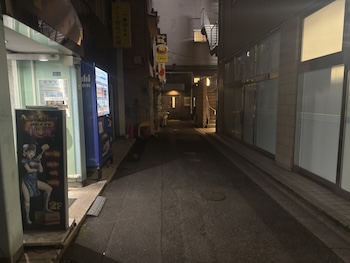
Many of the issues associated with Akihabara stem from the district’s underlying structure. Short-term tenant turnover, promotion strategies heavily dependent on social media, and differing expectations between tourists and regular visitors all interact within a compact area. At night, pedestrian flow disperses into backstreets, increasing the chances of friction. Under these conditions, minor disputes can escalate easily, whether related to pricing, aggressive solicitation, congestion on public roads, or conflicts over unauthorized filming and livestreaming.
Chiyoda Ward introduced an ordinance against street solicitation in 2014, and joint patrols involving public authorities and private stakeholders have continued on a regular basis through 2025. These efforts combine on-site deterrence with public awareness campaigns and reflect a long-term, incremental approach rather than a one-time crackdown.
Despite this, the impact of isolated incidents should not be underestimated. Once a case is reported, damage to the district’s image spreads quickly online. Anxiety amplified through social media can shape perceptions before visitors even arrive, creating the assumption that Akihabara may be unsafe. Such impressions often carry more weight than actual crime statistics. For this reason, timely and accurate communication of facts is critical. Conveying that ordinary daily life continues as usual has rarely been more important.
The role of media coverage also deserves scrutiny. Focusing solely on visually striking or sensational episodes risks reinforcing distorted impressions rather than helping audiences understand the broader context.
Differences in expectations around manners further complicate the situation. Questions surrounding street photography and privacy, rules governing concept cafés, cosplayers, and streamers, acceptable levels of noise and smoking, and the boundary between solicitation and casual conversation all fall into grey areas. These gaps in perception are not limited by nationality. Simply increasing multilingual signage is insufficient. What matters is how rules are communicated and enforced on the ground, and by whom.
Drawing Boundaries, Not Excluding: A Practical Direction for the District
The key concept for Akihabara’s future is coexistence. A simple principle underpins this approach: no tolerance for disruptive behavior, while remaining open to diverse forms of culture. Making this boundary visible and broadly shared among everyone connected to the district is essential.
Local merchant associations and volunteer groups continue efforts to display photography guidelines and street rules in multiple languages, while maintaining a visible presence in backstreets during weekend nights. Administrative bodies work to strengthen enforcement of existing ordinances, improve crowd flow management during events, and expand multilingual complaint channels. Law enforcement focuses on targeted patrols by time and location, using publicly reported enforcement cases as a form of visible deterrence. None of these measures are dramatic on their own, but together they form a cumulative foundation.
The informal self-policing networks that once characterized Akihabara no longer exist. Responsibility now rests on coordinated, institutional action.
From a business perspective, operators and building owners can incorporate bans on street solicitation and requirements for clear pricing into lease agreements. Individual shops, in turn, can display fees and rules clearly at their entrances. Over time, businesses that prioritize service quality over short-term attraction are more likely to retain repeat customers. These incremental steps help build a district where people feel comfortable walking, ultimately reinforcing Akihabara’s overall value.
Has Women’s Fandom Really Moved to Ikebukuro?
“Lately, fandom activities are all about Ikebukuro.”
This perception is increasingly common. But how accurate is it?
The Otome Road area near Ikebukuro Station’s east exit has firmly established itself as a hub for female-oriented specialty shops. The renovated Animate Ikebukuro flagship store, reopened in 2023, functions as more than a retail space. With event areas and theaters, it serves as a large-scale platform for experiential content. Combined with nearby live houses and venues for 2.5D stage productions, Ikebukuro allows merchandise purchases, event attendance, and collaboration cafés to be completed within a single area. For many fans, concentrating activities there is simply efficient.
This does not mean that interest has drained away from Akihabara. It is more accurate to describe the situation as a clearer division of roles. Akihabara continues to dominate in areas such as male-oriented merchandise, trading card games, and electronic gadgets, while Ikebukuro excels in large-format stores and event infrastructure aimed at female audiences. On social media, this can appear as a shift, but in practice audiences have dispersed rather than relocated, sometimes even flowing between the two districts.
Comfort also plays a role, particularly for women visiting alone. Indoor complexes like Sunshine City, located close to the station and unaffected by weather, make it easier to spend an entire day comfortably. By contrast, Akihabara’s outdoor layout, combined with weekend congestion and solicitation, can reduce the overall experience. This does not indicate a decline in Akihabara’s appeal, but rather reflects differences in environmental design.
In conclusion, fandom activity has not “moved” to Ikebukuro so much as expanded there. Akihabara continues to deepen its focus on certain segments, while Ikebukuro develops broader, event-centered offerings. Rather than competing directly, the two districts now complement each other, expanding the range of choices within Tokyo’s broader fan culture ecosystem.
Foreign Visitors and the Gap in Expectations Around Concept Cafés
Consider the perspective of an international visitor arriving in Akihabara. Many expect a “holy site” of anime culture and a classic maid café experience. In practice, the reality often diverges. The district includes venues that emphasize superficial appearances without preserving the underlying cultural framework, creating a gap between expectation and experience.
Originally, concept cafés were designed as cultural spaces built around shared settings and interaction. In today’s Akihabara, that foundation has weakened in some cases. Shops where costumes take precedence over training and context have increased, altering how the culture is perceived.
Visitors who rely on online ratings can experience culture shock, particularly in areas such as Maid Street, where solicitation by staff in costume undermines expectations. Some tourists come to believe that this represents Akihabara culture as a whole.
This dynamic may contribute to the outward movement of certain cultural formats. Butler cafés and female-oriented concept cafés have increasingly appeared in areas like Ikebukuro and Nakano. Ironically, establishments most committed to preserving the original intent of the culture are often the ones that choose to leave.
Reestablishing trust in Akihabara as a center of moe culture will not be easy. Higher service standards and a clearer redefinition of what that culture represents are increasingly necessary.
Related considerations
The example that once attacked Akihabara. At that time, Akihabara was surrounded by silence… And the tenants of the building withdrew from the shops one after another. We are telling you both the situation at that time and the current movement.

Do you want a review of the local experience in Akihabara? Then I will deliver a story unique to Akihabara that the author actually experienced.
The conflict that took place in Akihabara. It was an unprecedented maid cafe boom around 2000! I’m introducing a masterpiece that expresses it in anime.

It is the decisive battle at the top of the otaku town in Tokyo, Japan. We are considering the differences with data.
We are rooting for girls’ recommendation activities! Speaking of recommended activities in Tokyo, Akihabara and Ikebukuro in Tokyo. I’m doing my best to consider it.
Now, let’s eat delicious gourmet food in Akiba! Of course, speaking of Japan, it’s ramen. There are many ramen shops in this otaku district. And there is a ramen trend in each city in Tokyo.

The lucky bag that otaku in Akihabara wants. The contents of this annual bag are gorgeous! And I’m conveying this information.

Are you scared at night in Tokyo? We also considered countermeasures in the ranking of the danger of various cities.We will deliver Tokyo sightseeing that you can enjoy safely.
How did the city of Akihabara become the current otaku city? It required many situations and times.
Akihabara Shrine. It’s a sacred place where geeks overlap. History proves it.

Speaking of Japan, it’s ramen! And the tourist city of Akihabara also has a ramen culture. Please let me know in detail!
Author’s Note
Akihabara is many things at once.
It is a tourist destination, a place to work, and part of our everyday lives.
Large forces such as inbound tourism and redevelopment cannot be stopped.
What can be done is simple, but firm:
no to disruptive behavior, yes to culture.
That principle reflects a quiet determination rather than a loud demand.
Making prices and rules visible.
Eliminating aggressive solicitation.
Ensuring that people can walk safely at night.
There is no shortcut. Progress comes only from continuing these unglamorous, everyday efforts.
A city is not something to observe from a distance.
It is something shaped, protected, and spoken for by the people who live within it.
Through this site, I will continue to document what is happening and propose practical ways forward.
The boundaries we envision operate on three levels.
At storefronts, total pricing, age requirements, and photography rules should be clearly displayed.
On the streets, zero solicitation should be the standard, preserving a calm and walkable environment.
Online, exaggerated advertising should be avoided, and sincere channels for feedback and complaints should be maintained.
This work is not about excluding anyone.
It is about accurately tuning expectations for everyone who visits.
That requires honest communication.
When we speak of “recording,” we do not mean nostalgia.
These records are messages to the future, written with care for Akihabara.
Tolerance is not the same as disorder.
A freedom without boundaries harms the most vulnerable first.
True freedom exists only within rules that are understood and respected.
Where to direct one’s gaze, asking before taking photos, maintaining a comfortable distance—
these unwritten norms need to be articulated and shared.
Reducing ambiguity is the only way to protect freedom in the long term.
Akihabara does not need to treat Ikebukuro as a rival.
The relationship is not competition, but division of roles.
Ikebukuro offers safe, weatherproof indoor spaces.
Akihabara offers discovery hidden in its side streets.
By recognizing these differences, those of us who communicate can connect the two districts through new stories.
Throughout history, Akihabara has reflected its era.
The electric town, DIY PCs, moe culture, inbound tourism—
each layer belongs to its time, and none should be denied.
The frictions we see today are signs of a living city, not of decline.
They are growing pains.
Turning that pain into future strength is our responsibility as people who care about this place.
What is needed is not louder voices,
but quiet resolve and concrete steps.
To draw lines with our own hands.
To record with our own words.
To improve with our own feet.
If we do not lose sight of that process, Akihabara will remain endlessly compelling.
Protecting the freedom to say “I love this place” is, in the end, a simple task.
Contributed by: Kumao
↓Please dig deep into Akihabara-related articles!↓
Akihabara Timeline (1990–2019): How Tokyo Became the World’s Top Otaku City
Tokyo’s Most “Moe” Week: Why Kanda Matsuri + Atre Akihabara Hits Different
Akihabara People Watching: Strange Voices from a Quiet Cafe
Akihabara Travel Story: The Anime Umbrella Theft That Froze the Room
In 2022, when Akihabara was full of vacant tenant → Verify what happened nowAkihabara Travel Story: The Anime Umbrella Theft That Froze the Room
Akiba Maid War Review With No Spoilers|Japanese anime
Akihabara vs Ikebukuro |Two Otaku Capitals, Two Completely Different Rulebooks
Recommended Women’s Complete Guide | Ikebukuro and Akihabara Street Walking Saved Version
Introducing the trends and stores of Akihabara ramen shops.
Akihabara Lucky Bags 2026
Akiba Shrines: Between Circuits and Silence — The Hidden Spiritual Layer of Tokyo’s Electric Town
Akihabara: From Radio Parts to Otaku Sanctuary—A Journey Through Japan’s Electric Town
Sources and References
(Primary data and official public materials)
- Approximately 37 million inbound visitors to Japan in 2024 (Government announcement)
Prime Minister’s Office of Japan / JITTI USA - Chiyoda Ward Ordinance on the Prevention of Street Solicitation in Public Spaces
(Overview and full text PDF)
Official website of Chiyoda City - Petition to the Chiyoda City Assembly regarding overtourism countermeasures (January 2025)
Chiyoda City Assembly - Reports on joint patrol activities around Akihabara Station (April 2025)
Takaya Kobayashi – Initiatives for urban development in Chiyoda City - News coverage on emergency response training following a train knife attack incident (March 2024)
TV Asahi News - Press release and architectural information on the opening of “COLOR・US Akihabara”
Nippon Steel Kowa Real Estate (corporate website) / kenchiku-keikaku.co.jp - Ikebukuro “Otome Road” (official overview and explanatory articles)
Toshima City official website / Nippon.com
Note:
This article prioritizes primary sources and official public materials.
To avoid misrepresentation, it refrains from definitive claims about individual incidents involving proper nouns.
Figures and operational details may be updated over time and will be revised as necessary.