Jujutsu Kaisen is often praised for its intense fights and dark tone.
But Japanese viewers quickly notice another layer running quietly underneath the action.
Early Season is filled with casual pop culture references. They are not explained because, in Japan, they do not need to be. This article gently explains those references for global viewers, using official international episode titles and names.
This is not trivia for trivia’s sake. These references shape tone, humor, and character perception in ways that subtitles alone cannot fully convey.
Episode titles below follow the global streaming names.
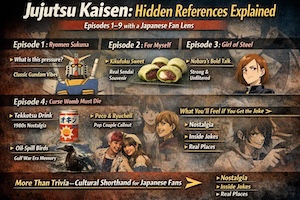
Episode 1 – Ryomen Sukuna
What is this pressure
A classic Gundam-era line
When a character reacts with something like “What is this pressure,” Japanese viewers immediately recognize it as genre language. This phrasing became especially common through mecha anime, most famously the Gundam series.
In titles such as Mobile Suit Z Gundam, characters frequently sense an overwhelming presence before a powerful enemy even appears. The line does not mean literal pressure. It means aura, killing intent, or an instinctive understanding that the power balance has completely collapsed.
So when Jujutsu Kaisen uses this wording, it is not accidental or awkward dialogue. It is a deliberate switch into battle-anime language, signaling danger at a subconscious level for Japanese viewers.
A body split in two and a very old anime memory
Another reaction some Japanese fans have comes from visual association. A character whose body is divided left and right instantly reminds older viewers of Baron Ashura from Mazinger Z.
Baron Ashura is a classic villain whose design is half male and half female. Even decades later, this imagery remains a cultural shortcut. When Japanese fans mention Ashura in relation to Jujutsu Kaisen, they are not claiming a direct reference. They are expressing a shared visual memory that still lives in the background of Japanese pop culture.
Episode 2 – For Myself
Kikufuku is real, and that matters
Gojo casually buying Kikufuku lands as a quiet joke for Japanese viewers. Kikufuku is a real regional sweet from Sendai, famously sold by Kikusuian. The zunda flavor, made from sweet edamame, is especially well known.
This kind of specificity feels very Japanese. It is the exact sort of souvenir someone would bring back for coworkers after a short trip. Dropping such an ordinary, local detail into a supernatural story grounds the character immediately.
For global viewers, this is not worldbuilding trivia. It is character writing. Gojo feels real because he behaves like a real Japanese adult.
Jennifer Lawrence and sudden real-world naming
When Yuji mentions Jennifer Lawrence as his type, Japanese viewers laugh for a slightly different reason than international fans.
In Japan, suddenly naming a real Hollywood star in casual conversation has an absurd edge. It feels blunt and oddly honest, which perfectly fits Yuji’s personality. At the same time, the reference translates cleanly because Jennifer Lawrence is already global pop culture.
This line survives translation well, but its humor still comes from the contrast between teenage honesty and extreme circumstances.
The author immediately searched for Jennifer….
You always search right away!
Episode 3 – Girl of Steel
Why Nobara’s attitude hits differently in Japanese
Kugisaki Nobara’s introduction feels sharp and uncompromising. To Japanese viewers, her dialogue reads as socially bold rather than simply rude.
Japanese language often softens intent through indirect phrasing. When a character speaks plainly and aggressively, it signals confidence and refusal to perform politeness. Nobara is not framed as cute, gentle, or morally polished. That is exactly why her presence feels refreshing.
For English readers, it helps to understand that what sounds casual in subtitles often carries stronger social weight in Japanese.
Episode 4 – Curse Womb Must Die
Tekkotsu Inryo and late-1980s Japan
One reference Japanese fans bring up around this episode is Tekkotsu Inryo, a soft drink released in the late 1980s. It was famous not just for the drink itself, but for its energetic TV commercials and catchy image song.
For people who grew up in Japan, the phrase instantly triggers nostalgia. Even a brief mention can summon the sound, visuals, and mood of an entire era.
Peco and Ryuchell as cultural shorthand
Peco and Ryuchell were a highly visible celebrity couple associated with Harajuku fashion and pop television. Mentioning them is a quick way to evoke colorful, playful, fashion-forward energy tied to a specific time period.
Japanese conversation often uses real celebrities as shorthand rather than explanation. If you recognize them, the meaning is immediate. If you do not, it sounds random. That gap is exactly where gentle explanation helps global readers.
Oil-covered seabirds and shared news memory
The image of oil-covered seabirds carries a heavier association. In Japan, it strongly connects to television coverage of oil spills during the Gulf War era. Those images were broadcast repeatedly and left a lasting impression.
When Japanese viewers use this comparison, they are not being poetic. They are referencing a real visual memory shared by an entire generation.
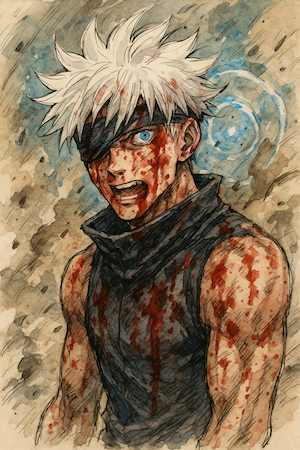
After episode 10, we will introduce it in this article.
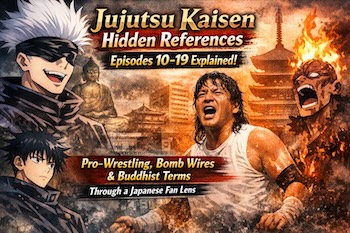
Now, next, interesting episodes from episode 10 to 19 are waiting for you!
Are you ready?
Why these references matter
Jujutsu Kaisen does not require viewers to catch these references to follow the story. Instead, they function as texture.
Just as live-action dramas use brand names or familiar jingles to anchor reality, Jujutsu Kaisen uses Japanese cultural memory. The result is dialogue that feels lived-in rather than scripted.
Understanding these layers does not change the plot. It deepens the experience.
All Write:kumao
This site conveys the true record of Jujutsu Kaisen in Japan.
[The box office success of the theatrical version of “Jujutsu Kaisen”: a thorough analysis of the factors that caused the record hit|akihabara.site Official
↓Click here for anime-related articles↓
・Detective Conan OVA Complete List (2026): All Episodes Explained, Timeline & Canon Status
・Detective Conan Movies: What TV Episodes to Watch Before Each Film
・MyAnimeList Top 50 Anime: A 2026 , I tried to consider it from the perspective of a Japanese geek
・Every Anime Set in Akihabara: The Complete Guide to Japan’s Otaku District in Anime
・The Haruhi Suzumiya TV Anime 20th Anniversary Project ExplainedHaruhi’s SOS Brigade
・Joins Sanrio Virtual Festival 2026: What’s Official, What’s Likely, and How to Watch
・Akiba Maid War Review With No Spoilers|Japanese anime
・Pokémon Lovers, Don’t Miss This! The Ultimate Guide to Japan’s Local Pokémon Across 47 Prefectures
・The 7 Biggest Mysteries About Satoru Gojo That Have Jujutsu Kaisen Fans Buzzing
・Jujutsu Kaisen Hidden References Explained Episodes 1–9, With a Japanese Fan Lens
・Jujutsu Kaisen Hidden References Explained Episodes 10–19, With a Japanese Fan Lens
・Sushiro x JoJo Collaboration Starts in Japan(akihahabara,sendai,koube,OSAKA,TOKYO)
・Demon Slayer Finale Begins! Infinity Castle Arc Hits Japan Amid TV Hype—When Will America and Europe See It?