Tokyo is full of shops that look Japanese. That does not always mean the item is traditional craftwork, or even made in Japan.
This guide is for American and European visitors who want gifts with real provenance, not just a good story.
If you read the previous Kappabashi piece, you already know the core idea.
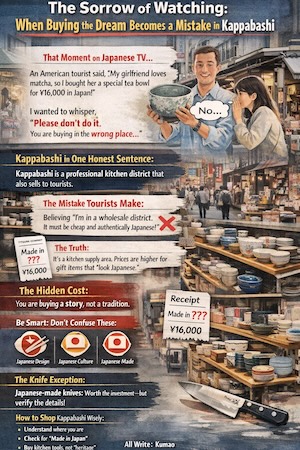
↓This article warned tourists of the misuse of shopping in Tokyo Kappabashi.↓
Now let us do the positive version.
Where should you go instead, if what you really want is Japanese craftsmanship.
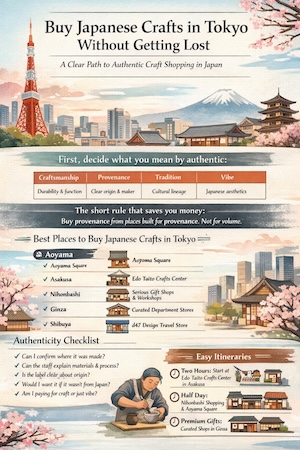
First, decide what you mean by authentic
| Authenticity Type | What You Are Really Buying | Best Shopping Style | Best Areas |
|---|---|---|---|
| Craftsmanship | Durability and function | Tool-focused shops | Nihonbashi, Ginza |
| Provenance | Clear origin and maker | Craft centers, workshops | Aoyama, Nihonbashi |
| Tradition | Cultural lineage | Museums, curated craft stores | Asakusa, Aoyama |
| Vibe | Japanese aesthetics | Tourist-friendly retail | Kappabashi, Shibuya |
Authentic can mean three different things. If you do not choose one, you will get lost fast.
Authentic as craftsmanship
It is well made, built to last, and designed for real use.
Authentic as provenance
You can confirm where it was made, who made it, or at least which workshop or region it comes from.
Authentic as tradition
It belongs to a recognized craft lineage such as Edo Kiriko glass, Edo folding fans, lacquerware, textiles, woodwork, ceramics, metalwork, or paper crafts.
Japan also has an official designation system for traditional craft products under the Ministry of Economy, Trade and Industry. That matters because it shows Japan itself separates craft tradition from general souvenirs.
You do not need to memorize the system. You only need to use the logic.
If provenance matters, shop where provenance is the product.
The short rule that saves you money
If provenance matters, buy from places that are built for provenance.
Not from places built for volume.
That is why this guide focuses on craft centers, curated craft shops, and the right floors of the right department stores.
In plain terms, you want places that do three things well.
They explain what you are buying.
They label origin clearly.
They curate instead of stacking endless inventory.
Best places to buy Japanese crafts in Tokyo
| Area | Best For | Craft Focus | Price Range | Provenance Clarity | Risk Level |
|---|---|---|---|---|---|
| Aoyama | First-time buyers | Multiple traditional crafts | Medium–High | Very High | Very Low |
| Asakusa | Learning before buying | Edo-era crafts | Low–Medium | High | Low |
| Nihonbashi | Serious gifts | Lacquerware, glass, workshops | Medium–High | High | Low |
| Ginza | Premium gifting | Curated crafts | High | Medium–High | Very Low |
| Shibuya | Understanding regions | Regional crafts overview | Medium | Medium | Low |
1 Aoyama area: Japan Traditional Crafts Aoyama Square
If you want one stop shopping for officially designated traditional craft products from across Japan, start here.
Japan Traditional Crafts Aoyama Square is a gallery and shop built around traditional crafts, not tourist momentum. You will see items from many regions in one space, which makes comparison easy. The staff are used to real questions, not just impulse souvenir shopping.
Who this is for
People who want a high confidence purchase, plus a quick education on what Japanese craftsmanship looks like across the country.
What to look for
Edo Kiriko glass, lacquerware, textiles, ceramics, regional craft items, and gift grade pieces that are meant to be kept for years.
Why it works
You are buying from a place that exists to represent crafts, not to move volume. Even if you do not buy anything, the visit calibrates your eyes.
Smart move
Visit early in your trip. After that, you will spot vague labels instantly in other neighborhoods.
👉️Japan Traditional Crafts Aoyama Square.MAP
2 Asakusa area: Edo Taito Traditional Crafts Center
Asakusa is tourist heavy, but this is the right kind of tourist stop.
The Edo Taito Traditional Crafts Center is a compact museum and shop concept that exhibits and explains many styles of traditional craftwork with multilingual support. It is located in Asakusa, close enough to the classic sightseeing routes that you can visit without planning a special expedition.
Who this is for
People who want to learn before buying, and people who want Edo era craft context without spending half a day.
Why it works
It gives you language. Not just vocabulary, but the ability to tell the difference between craft categories and to ask better questions.
Bonus move
After you visit, walk around Asakusa shops again. The same streets will feel different. Your chances of buying by accident drop dramatically.
👉️Edo Taito Traditional Crafts Center.MAP
3 Nihonbashi: the most underrated district for real crafts
Nihonbashi is where Tokyo quietly keeps its adult version of Japan.
If you want gifts that feel traditional but not gimmicky, Nihonbashi is a strong base. The area is full of long running stores, department stores with deep home goods floors, and curated selections that lean more serious than flashy.
Two reasons Nihonbashi works well for Western visitors.
First, curation tends to be better.
Second, staff are used to customers who care about quality and origin.
Where to start
Start with shops and curated corners connected to Tokyo craft programs, then move outward into specialty stores.
A practical example is TOKYO Teshigoto, a Tokyo Metropolitan Government project that curates modern products made with traditional techniques. Their store listing includes a real shop presence in Nihonbashi, which makes it easy to shop without guessing.
Experiences matter here
Nihonbashi also has craft workshops that can be booked in English, including glass engraving and dyeing experiences. This is not just a fun activity. It is a provenance cheat code.
A craft you make yourself becomes provenance you do not have to argue about.
If you want the gift to carry memory and legitimacy at the same time, this is one of the best paths in Tokyo.
※Nihonbashi is not Kappabashi.
Nihonbashi is a central shopping district near Tokyo Station.
Kappabashi is the kitchenware street between Asakusa and Ueno.
4 Ginza: curated craft gifts, clean packaging, high prices, low regret
Ginza is not the cheapest place, but it is one of the safest places to buy gifts that look premium and are curated.
This is where you go when you want a polished present, minimal friction, and a purchase you do not second guess later. Ginza department stores and curated floors tend to do the sorting work for you. You are paying for that filter, and for staff who are trained to explain rather than just sell.
Matsuya Ginza is one well known example that regularly features traditional crafts within a department store context, and provides clear floor guidance.
Who this is for
People who want a polished gift, tax free support, and minimal time loss.
How to shop smart here
Pay for curation, not for assumptions. Ask origin questions anyway. The safest districts still sell imported items. Curation reduces regret, it does not guarantee Made in Japan.
5 Shibuya: d47 for a fast survey of Japans craft landscape
Shibuya is not the first place most people associate with traditional crafts. That is exactly why d47 is useful.
d47 is built around Japans 47 prefectures and showcases regional products, craft traditions, and modern local design. Think of it as a cultural map you can walk through in one stop.
Who this is for
People who want to understand the map before they shop, and people who love the idea of regional identity more than luxury branding.
Why it works
You do not just see crafts. You see patterns. Materials, shapes, and regional differences start to make sense. After that, you shop with intention instead of vibes.
A simple authenticity checklist you can use anywhere
| If You Want This | Best Places | Places to Be Careful |
|---|---|---|
| Daily-use kitchen tools | Kappabashi, department stores | None |
| Traditional crafts | Aoyama, Nihonbashi | Kappabashi |
| Tea ceremony items | Craft centers, specialty shops | Tourist districts |
| High-end gifts | Ginza, curated stores | Random souvenir shops |
| Provenance-focused items | Craft centers, workshops | Volume retail areas |
Use this before you buy any object that you think is a cultural item.
- Can I confirm where it was made
- Can the staff explain materials and process, not just the story
- Is the label clear about origin, or does it hide behind Japanese style language
- Would I still want it if it were not from Japan
- Am I paying for craft, provenance, or vibe
If you can answer these cleanly, you will rarely regret the purchase.
A small but important note for modern Tokyo shopping.
Japanese design and Japanese manufacturing are not the same thing.
A product can be designed in Japan and made abroad. That can still be a good product. The problem starts when you think you are buying provenance, but you are actually buying aesthetics.
How to ask the right questions without being awkward
You do not need perfect Japanese. You only need clarity.
If provenance matters, ask one simple question and watch the answer.
Where was this made
A serious shop will answer directly or show you the label.
If the answer becomes a story about tradition, atmosphere, or how popular it is, slow down. That does not mean it is bad. It means you still do not have provenance.
Then ask one more.
Who makes it
Sometimes the answer is a workshop name. Sometimes it is a region. Sometimes it is a brand that is transparent about manufacturing.
Any of those are fine. What you want to avoid is a fog.

Three easy itineraries
Two hours, low stress
Asakusa. Start at the Edo Taito Traditional Crafts Center, then shop nearby with your eyes calibrated.
This route works because you learn first, then buy. The order matters.
Half day, high success rate
Nihonbashi for shop browsing and a possible workshop, then Aoyama Square for a final high confidence purchase.
This is the best balance of depth and efficiency.
Premium gifts in one block
Ginza department store floors and curated gift corners, then you leave with something that looks expensive because it is.
This route is ideal if your priority is gifting, not exploration.
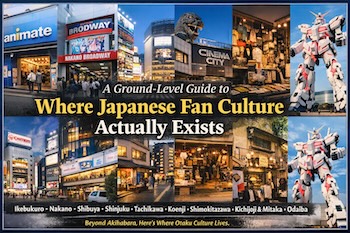
↓We also introduce the deep city of Tokyo!↓
The honest ending
Tokyo can sell you Japanese vibes on every corner. That is not evil. It is a city built on design, retail craft, and packaging genius.
But if what you want is Japanese craftsmanship with real provenance, you need to shop with a different map.
Buy provenance from places built for provenance.
Do that, and you get the best version of Tokyo shopping.
Not just a good story, but a gift you can explain with confidence when you bring it home.
All Write;Kumao