Japan-Wide Otaku Pilgrimage Trip: Traveling All of Japan Like an Otaku
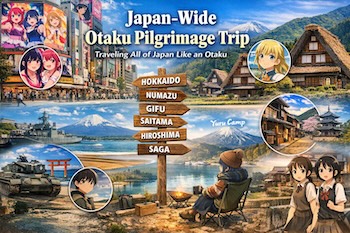
When you hear the phrase otaku holy land, the first place that comes to mind is usually Tokyo, Akihabara.
But wait a second.
All across Japan, there are still plenty of local otaku holy lands that most people do not know about yet.
In recent years, regional cities featured as anime settings have been booming, and the economic impact of anime pilgrimage travel, often called content tourism, has also drawn attention.
Numazu became nationally famous thanks to Love Live Sunshine, Oarai transformed through Girls und Panzer, and the setting of Free brought new energy to its local area. There are many more like this, where local love and fan passion overlap and a new kind of paradise is born.
This time, I am doing a full sweep.
I am traveling through all 47 prefectures, investigating each area’s otaku holy land level with my own criteria.
And at the end, I will reveal my own Top 10 ranking.
What I look at
- Whether there are anime settings and pilgrimage spots
- How strong the local otaku scene is, including shops, cafes, and facilities
- How often events happen, and how big they are
- And finally, the most important factor: my gut feeling of whether it makes me want to go
If you are thinking Akihabara is too far, do not give up.
Why not re-check your own region first?
Alright then.
Let us depart together on a 47-prefecture otaku journey.
※ Because the total amount would become enormous, I am focusing on representative highlights. I will keep updating links over time. If you are thinking something is missing, tell me in the comments. Also, share your own ranking too.
Hokkaido and Tohoku
Hokkaido
A massive wilderness with an unexpected sci-fi vibe, and stronger otaku culture than you might think
Hokkaido is the largest prefecture in Japan, and surprisingly, its otaku culture runs hotter than many people expect.
In Sapporo, major stores such as Animate and Toranoana are available, and during the Snow Festival you can even see anime character ice sculptures.
There are also areas that feel like they could match rural anime settings, including places tied to Silver Spoon around Obihiro, and island-style regions that give off a strong atmosphere for story locations.
And recently, the biggest point is Hatsune Miku, specifically Snow Miku. She has basically become a locally recognized character, and events plus themed trains are extremely popular.

Aomori
Folklore, horror, and otaku potential
Aomori may not be as famous as Tokyo or Kyoto in anime tourism, but it actually has clear, traceable connections to specific titles and scenes.
The most direct example is Flying Witch.
This series is set in Hirosaki City, and follows Makoto Kowata, a young witch living a calm rural life.
What makes it special is how faithfully the anime recreates real locations.
Scenes of Makoto walking through quiet neighborhoods, farmland, and traditional houses are directly modeled after Hirosaki. The relaxed pacing of the show mirrors the actual atmosphere of Aomori, making it one of the most “real-feel” slice-of-life anime settings in Japan.
For a completely different tone, Mount Osore is often compared to settings seen in supernatural anime and games.
While not tied to one single title, its barren volcanic landscape strongly resembles locations in works dealing with the afterlife or spirit worlds, making it a “conceptual sacred spot” for fans of darker themes.
Another culturally rich spot is the Nebuta Museum WA RASSE, where you can see massive festival floats up close.
These designs—bold faces, exaggerated expressions, dynamic poses—feel strikingly similar to anime character art, almost like stepping into a 3D illustration.
In terms of otaku shopping, Aomori is quieter, but you can still find Animate Aomori, which acts as a central hub for local fans.
Compared to Akihabara, it is small, but that contrast highlights the charm of regional otaku culture.
Overall, Aomori stands out not for quantity, but for authenticity.
If you want to experience a real anime setting with minimal commercial noise, this prefecture quietly delivers one of the most genuine atmospheres in Japan.
Iwate
The land of literary genius and fantasy, a pilgrimage spot for Bungou Stray Dogs fans
Iwate is not a flashy otaku destination, but it holds something more powerful:
locations that feel exactly like anime backgrounds, combined with real cultural depth.
One of the strongest direct connections is through the work of Kenji Miyazawa, a legendary writer born in Iwate.
His stories inspired many anime adaptations, including Night on the Galactic Railroad.
The main character, Giovanni, travels through a dreamlike cosmic world, but the emotional core of the story is deeply rooted in Miyazawa’s life in Iwate.
The quiet countryside, star-filled skies, and melancholic tone all reflect the region’s atmosphere. Visiting Iwate feels like stepping into the emotional backdrop of this film.
Another major highlight is Tono, famous for folklore and yokai legends.
This area strongly resembles settings seen in supernatural slice-of-life anime, where spirits coexist with everyday rural life. Even without a single flagship title, the “anime-like” feeling here is unmistakable.
For historical scenery, Hiraizumi—a UNESCO World Heritage site—offers temples and landscapes that look straight out of historical anime.
Locations like Chuson-ji Temple evoke the same atmosphere seen in period works such as Heike Monogatari, where elegance and impermanence define the tone.
In Morioka, the prefectural capital, you can find smaller otaku hubs like Animate Morioka.
While not large, these stores support a steady local fanbase and show that otaku culture exists even in quieter regions.
Iwate’s strength is not quantity, but emotional authenticity.
Rather than “famous anime spots,” it offers something deeper—the kind of scenery and mood that anime itself is built from.
Miyagi
Top class in pilgrimage site count, an anime heaven centered on Sendai
MMiyagi, especially Sendai, is one of the strongest anime-linked regions in northern Japan, with clear titles, characters, and real-life locations you can actually visit.
The most direct connection is Wake Up, Girls!, a series set in Sendai itself.
The story follows a local idol group trying to succeed in a regional city, led by characters like Mayu Shimada.
What makes this anime stand out is its realism.
Scenes around Sendai Station, shopping arcades, and everyday streets are directly modeled after real locations. Fans can walk the same paths as the characters, making it a classic “urban pilgrimage” title.
Another major connection comes from Haikyuu!!.
Although the school itself is fictional, the setting is heavily inspired by Miyagi. The team Karasuno High School Volleyball Club, featuring Shoyo Hinata, represents the spirit of regional high school sports culture.
The rural gyms, town atmosphere, and local train lines shown throughout the series closely resemble real areas in Miyagi, giving fans a strong sense of place even without a single fixed landmark.
For something more modern and symbolic, Miyagi is also known for Zundamon, a character representing the region’s famous food, zunda (sweet edamame paste).
Originally part of the Tohoku Zunko Project, Zundamon has recently exploded in popularity online, becoming a meme icon and voice synthesis character.
In terms of otaku shopping, Sendai offers solid options like Animate Sendai, along with other hobby shops clustered around the station area.
It is not as dense as Akihabara, but it functions as the central hub for the entire Tohoku region.
Akita
Quiet like Komachi, but it burns with hidden pilgrimage power
Akita is a prefecture where traditional folklore and quiet rural life directly connect to anime settings and character backstories.
The clearest anime link is Hinako Note.
The main character, Hinako Sakuragi, comes from a remote countryside village—strongly inspired by regions like Akita.
In the early episodes, Hinako struggles with communication due to her isolated upbringing.
Scenes showing vast fields, few neighbors, and a slow-paced lifestyle reflect the reality of northern rural Japan. This “gap” between countryside and Tokyo life becomes a core emotional theme of the series.
Another major cultural element is the Namahage tradition.
These demon-like figures visit homes during New Year, shouting warnings to lazy children.
Visually, Namahage strongly resembles designs seen in anime and games involving yokai or demons.
The masks, costumes, and dramatic presence feel like something straight out of a dark fantasy setting, making it a powerful “real-life reference point” for character design.
For scenery, Akita’s heavy snow and traditional houses create landscapes that look exactly like winter anime backgrounds.
Quiet towns, white-covered streets, and minimal crowds give a sense of stillness that is often used in emotional or nostalgic scenes.
In terms of otaku culture, options are limited but present.
You can visit Animate Akita, which acts as a small but important hub for local fans.
Overall, Akita is not about quantity, but about purity of atmosphere.
If you want to experience the kind of rural setting that shapes many anime characters and stories, this region offers one of the most authentic versions in Japan.
Yamagata
When hot springs meet anime, you get a comforting holy land
Yamagata has many onsen areas, which makes it easy to combine travel and pilgrimage.
It is also known as a setting for Only Yesterday, and there are places that still preserve rural scenery that feels nostalgic and cinematic.
The Yamagata International Documentary Film Festival also sometimes includes animation-related screenings, so the film culture itself has depth.
Fukushima
A serious pilgrimage scene born from adversity
Fukushima is one of the most meaningful anime-related regions in Japan, combining real pilgrimage locations, character-driven stories, and powerful real-world context.
One of the most direct connections is Hanayamata—but even more notably, Fukushima gained strong attention through collaborations with anime after the 2011 disaster.
A major symbolic example is Lucky Star and its character Konata Izumi, who was used in official tourism campaigns to support regional recovery.
This created a rare case where an anime character became part of a real-world revitalization effort.
Another important cultural anchor is Aizuwakamatsu, known for its samurai history.
The town’s preserved streets and sites like Tsuruga Castle resemble settings seen in historical anime.
Fans of period works—such as Rurouni Kenshin—often find the atmosphere here strikingly similar to scenes depicting the late Edo and Meiji transition era, where swordsmen and shifting values define the narrative.
For everyday scenery, Fukushima’s rural towns and train lines evoke the same feeling found in emotional slice-of-life anime.
While not always tied to a single title, the quiet streets, mountains, and open skies create the kind of setting where many anime stories could naturally unfold.
In terms of otaku shopping, you can visit Animate Fukushima, which serves as a local hub for fans across the prefecture.
Fukushima’s uniqueness lies in its story beyond fiction.
It is a place where anime, characters, and real-life recovery efforts intersect—making it not just a location to visit, but a place to understand how anime culture can connect to the real world.
Kanto Outside Tokyo, plus Tokyo as a Separate Tier
Ibaraki
Tanks and anglerfish, Oarai is an otaku paradise
Ibaraki is widely known among anime fans as a top-tier pilgrimage destination, thanks to one major title that completely transformed a real town.
That title is Girls und Panzer.
The story centers on high school girls operating tanks, led by Miho Nishizumi.
The setting is Oarai, and what makes it exceptional is how accurately the anime recreates the town.
From the shopping streets to intersections and coastlines, fans can match scenes frame-by-frame with real locations.
One of the most iconic spots is Oarai Isosaki Shrine.
Its torii gate standing on seaside rocks appears in both real-life tourism visuals and anime-style compositions, making it a must-visit photo location.
The collaboration between the anime and the town goes far beyond visuals.
Shops display character panels, sell themed goods, and even participate in events. During festivals, it feels as if the entire town has merged with the anime world.
This level of integration is rare—Oarai is often considered one of the most successful anime-town collaborations in Japan.
For shopping, nearby cities like Mito offer stores such as Animate Mito, providing access to standard otaku goods while visiting the region.
Ibaraki, through Oarai, proves that anime can do more than inspire—it can reshape a real town into a living, breathing part of its story.
Tochigi
Quietly hot, railway culture and otaku-friendly vibes
Tochigi blends iconic historical scenery with everyday landscapes that feel straight out of anime, making it a subtle but rewarding destination for fans.
The most famous landmark is Nikko Toshogu Shrine, a UNESCO World Heritage site.
Its intricate carvings, vibrant colors, and sacred atmosphere strongly resemble settings seen in historical and fantasy anime.
Fans of works like Demon Slayer: Kimetsu no Yaiba often find similarities in the visual tone—ornate shrine architecture, forested paths, and a sense of spiritual weight.
While not an official location, the atmosphere aligns closely with scenes involving training grounds and hidden sanctuaries.
For a softer, more romantic tone, Ashikaga Flower Park is famous for its wisteria gardens.
During peak bloom, the cascading purple flowers create a dreamlike space that feels like a direct reference to emotional or climactic anime scenes.
This kind of visual—characters standing under glowing blossoms at night—is a classic motif across many series, making it a “real-world anime background” experience.
Urban areas like Utsunomiya also offer slice-of-life vibes.
Quiet streets, local shops, and a slower pace of life resemble the everyday settings seen in school or coming-of-age anime.
For otaku shopping, you can visit Animate Utsunomiya, which serves as a regional hub.
Tochigi is not about one dominant title, but about visual and emotional familiarity.
It offers the kind of scenery that anime constantly draws from—making it feel strangely recognizable even on your first visit.
Gunma
A land surrounded by mountains and hot springs, with that ideal anime landscape feel
Gunma is one of the most recognizable anime pilgrimage regions in Japan, especially for fans of street racing and atmospheric settings.
The biggest connection is Initial D.
The story follows Takumi Fujiwara, a tofu delivery driver who becomes a legendary downhill racer.
The iconic setting is Mount Haruna (called Akina in the series).
The winding mountain road is recreated almost exactly in the anime, and scenes of Takumi’s night runs—especially the famous gutter technique—are directly tied to this location.
For fans, driving or visiting this road is one of the most authentic “real = anime” experiences in Japan.
Another strong point is Gunma’s onsen towns.
Ikaho Onsen features long stone steps lined with traditional inns, a layout often compared to scenes from Spirited Away.
While not an official model, the atmosphere—lanterns, narrow alleys, and layered buildings—feels strikingly similar.
For a more famous hot spring, Kusatsu Onsen is known for its steaming Yubatake centerpiece.
The visual impact—white steam rising through the town—matches the kind of dramatic environment often used in anime openings or travel episodes.
On the otaku side, Gunma has solid regional hubs.
You can visit Animate Takasaki, which serves as the main anime goods center in the prefecture.
In addition, stores like Surugaya Takasaki offer second-hand figures, games, and merchandise, making it a good stop for collectors.
Overall, Gunma offers a balanced experience:
highly specific anime locations, strong visual identity, and enough otaku infrastructure to support a full pilgrimage trip.
Saitama
An anime high-density zone, a true battlefield prefecture
Saitama is one of the strongest anime pilgrimage prefectures in Japan, offering multiple major titles, real locations, and active fan culture.
The most famous example is Lucky Star.
The shrine featured in the series is Washinomiya Shrine, where fans visit to see ema (wooden plaques) filled with illustrations of characters like Konata Izumi.

This location became one of the earliest large-scale anime pilgrimages in Japan.
Even today, it is known as a “sacred site of otaku culture,” where anime fans and local traditions coexist.
Another iconic connection is Crayon Shin-chan, set in Kasukabe.
The main character, Shinnosuke Nohara, lives an everyday life in this suburban city.
Scenes of neighborhoods, parks, and shopping streets are directly inspired by real locations, making Kasukabe feel like stepping into the anime’s world.
For a more emotional and cinematic experience, Anohana: The Flower We Saw That Day is set in Chichibu.
The story follows characters like Meiko Honma (Menma), and many scenes—such as bridges, train crossings, and riverbanks—can be visited in real life.
Chichibu has embraced the anime fully, with collaboration maps, posters, and seasonal events that recreate key scenes from the story.
For otaku shopping, Saitama offers strong hubs in Omiya and surrounding areas.
You can visit Animate Omiya, along with stores like Surugaya Omiya, where you can find figures, games, and second-hand goods.
Overall, Saitama stands out because it combines:
iconic anime titles, real-life locations you can walk through, and a fully developed fan ecosystem.
Chiba
A treasure trove of pilgrimage-friendly areas where city and nature mix
Chiba is often overlooked because of Tokyo’s shadow, but it actually offers multiple strong anime and game connections with real, walkable locations.
One of the clearest examples is My Teen Romantic Comedy SNAFU (OreGairu).
The story is set in Chiba, and follows Hachiman Hikigaya and Yukino Yukinoshita.
Many scenes are inspired by real areas around Chiba City and Makuhari.
Seaside roads, urban layouts, and school surroundings reflect the actual atmosphere of the region, giving fans a grounded, realistic setting.
Another major connection is Yahari Ore no Seishun Love Comedy wa Machigatteiru events and collaborations held at Makuhari Messe.
This venue is also deeply tied to the The Idolmaster Cinderella Girls franchise, where large-scale live events and fan gatherings take place.
For game fans, Chiba’s coastal and suburban landscapes resemble open-world environments often seen in Japanese RPGs—wide roads, seaside views, and modern residential zones.
In terms of otaku shopping, Chiba has solid infrastructure.
You can visit Animate Chiba, as well as Gamers Chiba, both located near Chiba Station and serving as central hubs for anime goods and events.
Overall, Chiba offers a unique mix:
realistic modern anime settings, major event venues, and accessible otaku shopping—all within easy reach of Tokyo.
Kanagawa
Yokohama, Kawasaki, Shonan, a live-action anime prefecture with huge range
Kanagawa is one of Japan’s most powerful anime regions, combining world-famous pilgrimage spots, urban aesthetics, and strong character-driven stories.
The most iconic example is Slam Dunk.
The famous railway crossing scene near Kamakurakokomae Station is directly tied to Hanamichi Sakuragi.
This location has become one of the most photographed anime spots in Japan.
Fans recreate scenes of Sakuragi standing by the crossing, with the ocean and Enoden train in the background—an image instantly recognizable even outside anime fandom.
Another major connection is Rascal Does Not Dream of Bunny Girl Senpai.
The story follows Sakuta Azusagawa and Mai Sakurajima, and is heavily set around Enoshima and Fujisawa.
Key scenes—such as conversations on seaside roads, stairways, and bridges—are based on real locations.
Walking through Enoshima feels like stepping directly into the anime’s emotional core.
For a more urban and stylish tone, Yokohama stands out.
Areas like Minato Mirai appear frequently in anime as a modern waterfront city, often used for date scenes, night views, and dramatic encounters.
In terms of otaku shopping, Kanagawa offers strong options.
You can visit Animate Yokohama, along with stores like Gamers Yokohama and Surugaya Yokohama.
Overall, Kanagawa delivers a complete experience:
globally recognized anime locations, emotionally memorable scenes, and a fully developed urban otaku culture—all in one prefecture.
Tokyo, Separate Tier
The world’s otaku capital, Akihabara and its allies
Tokyo is basically a holy land cluster.
- Akihabara: maid cafes, electronics culture, anime shops
- Ikebukuro: the center of female-oriented fandom culture
- Nakano Broadway: retro and collector heaven
- Kichijoji and Shimokitazawa: daily-life background style neighborhoods that appear in anime frequently
Tokyo is the undisputed center of anime culture, where countless titles, characters, and real-world locations overlap in one massive urban space.
The most iconic area is Akihabara, often called the “holy land of otaku.”
This district appears in many anime, most notably Steins;Gate, featuring Rintaro Okabe.
Locations like the former Radio Kaikan building and surrounding streets are recreated with high accuracy.
Walking through Akihabara feels like stepping directly into the world of the series, especially for fans of time-travel and sci-fi narratives.
Another globally recognized pilgrimage site comes from Your Name.
The staircase at Suga Shrine is where Taki Tachibana and Mitsuha Miyamizu meet in the final scene.

There is also the Ghibli Museum in Mitaka, plus scattered shrines and cafes used as real-world models.
Tokyo is ridiculous because almost anywhere you go, you can find a place that feels like it belongs to a story.

This spot has become internationally famous, with fans recreating the emotional climax of the film.
Tokyo also dominates in urban anime settings.
Areas like Shinjuku frequently appear in action and drama anime, while Shibuya is known for its chaotic crossing scenes, often used in apocalyptic or large-scale narratives.
In terms of otaku shopping, Tokyo is unmatched.
Major stores include Animate Akihabara, Mandarake Complex, Gamers Akihabara, and Surugaya Akihabara.

If Japan is the home of anime, then Tokyo is its beating heart.
From new releases to rare collectibles, everything is available within walking distance.
Tokyo’s true strength lies in its density.
Unlike other regions with one or two key spots, Tokyo offers an entire city where anime exists as part of everyday life.
Also, I appear in this area way too often. Please be careful.
Chubu
Niigata
Otaku culture plus snow country, a surprisingly hot spot
Niigata is known for its heavy snowfall and vast rural landscapes, making it a perfect match for slow-paced, countryside anime settings.
The closest direct connection comes from Non Non Biyori.
While the exact location is fictional, the setting—wide rice fields, quiet villages, and long winters—strongly resembles regions like rural Niigata.
Characters such as Renge Miyauchi live in an environment where there are very few students and almost no urban distractions.
Scenes of walking through empty roads, playing in nature, and experiencing seasonal changes mirror the real atmosphere of Niigata’s countryside.
Another notable cultural element is Sado Island, known for its isolated geography and traditional culture.
The island’s coastline, old villages, and unique history give off a strong “anime setting” feeling, especially for stories involving travel, folklore, or introspection.
Niigata’s heavy snow is also a defining feature.
Winter scenes—covered rooftops, silent streets, and deep snow—look exactly like backgrounds used in emotional or nostalgic anime episodes.
For otaku shopping, the main hub is Animate Niigata, located near Niigata Station.
While smaller than big-city stores, it provides access to current anime goods and acts as a gathering point for local fans.
Overall, Niigata offers something subtle but powerful:
the kind of quiet, seasonal world that many anime stories are built upon.
Toyama
The home of P.A.WORKS, a holy land source region
Toyama is not a large anime hotspot, but it has one of the most accurate and beloved real-life anime settings in Japan.
The key title is Hanasaku Iroha.
The story follows Ohana Matsumae, who begins working at a traditional inn in the countryside.
The model for the inn and surrounding town is Yuwaku Onsen—geographically just outside Toyama, but culturally tied to the Hokuriku region, including Toyama.
Scenes of Ohana running through narrow streets, working in the ryokan, and interacting with guests are recreated with remarkable accuracy.
Fans visiting the area can match buildings, paths, and even camera angles from the anime.
Another related work is Glasslip, produced by PA Works, a studio based in Toyama.
While the setting is fictional, the seaside town, summer atmosphere, and calm pacing reflect the region’s real environment.
Toyama’s natural scenery—mountains, rice fields, and coastal views—frequently resembles backgrounds seen in slice-of-life anime.
The balance between sea and mountains creates a distinctive visual identity.
For otaku shopping, you can visit Animate Toyama, which serves as the main hub for anime goods in the prefecture.
Toyama’s strength lies in its precision.
Rather than offering many scattered references, it delivers one deeply faithful anime world that you can step directly into.
Ishikawa
Kanazawa plus Kaga hot springs, adult pilgrimage travel
Ishikawa, centered around Kanazawa, offers a unique blend of traditional Japanese culture and strong anime studio connections.
The most important anime link is Hanasaku Iroha.
The story follows Ohana Matsumae, who works at a countryside inn.
The real-life model is Yuwaku Onsen, located in the mountains near Kanazawa.
The layout of the town, the ryokan atmosphere, and even small details like bridges and streets are recreated with high accuracy.
Fans can walk through the same paths Ohana runs through, making it one of the most faithful anime-to-real-world recreations in Japan.
Another key point is the influence of P.A.Works, a studio based in the Hokuriku region.
Many of their works—including Shirobako—reflect a grounded, realistic approach to storytelling that is deeply connected to regional life.
Kanazawa itself is also visually powerful.
Areas like Higashi Chaya District feature preserved Edo-era streets, wooden buildings, and lantern-lit alleys.
These locations resemble scenes from historical or atmospheric anime, where traditional Japan plays a central role.
For otaku shopping, Kanazawa offers solid options such as Animate Kanazawa and nearby hobby shops, providing access to current anime goods even in a culturally traditional city.
Overall, Ishikawa stands out by combining:
a highly accurate anime pilgrimage site, strong studio influence, and one of Japan’s most beautiful historical cities.
Fukui
Not only dinosaurs, but local otaku culture built on warmth
Fukui is a lesser-known anime destination, but it has a clear modern connection to a specific youth story and strong visual locations.
The key title is Chitose Is in the Ramune Bottle (commonly known as Chiramune).
The story follows high school life centered around Saku Chitose, a charismatic student navigating friendships, reputation, and youth.
The setting is directly modeled on Fukui City and its surrounding areas.
Scenes of school life, local streets, and everyday hangout spots reflect real locations, giving the series a grounded and realistic atmosphere.
Conversations between characters—especially those dealing with social dynamics and identity—often take place in ordinary locations like roads, cafes, and school routes, which fans can trace in real life.
For dramatic scenery, Tojinbo Cliffs offers one of the most visually striking coastal landscapes in Japan.
The rugged rock formations and crashing waves resemble scenes used in intense or emotional anime moments.
Another unique feature of Fukui is the Fukui Prefectural Dinosaur Museum.
As one of the world’s leading dinosaur museums, its exhibits feel almost like stepping into a game or anime setting involving prehistoric themes.
For otaku shopping, options are limited but present.
You can visit Animate Fukui, which serves as a small but important hub for anime fans in the region.
Fukui’s strength lies in its focus:
a realistic youth story tied to real locations, combined with powerful natural scenery and unique cultural elements.
Yamanashi
Yuru Camp turned this place into a national-level holy land
Yamanashi is one of the strongest anime pilgrimage regions in Japan, driven almost entirely by one massively influential title.
That title is Laid-Back Camp (Yuru Camp△).
The story follows characters like Rin Shima and Nadeshiko Kagamihara, who enjoy camping across Yamanashi.
The level of real-world accuracy is extremely high.
Locations such as Lake Motosu appear exactly as depicted in the anime—most famously in scenes where Rin sets up her campsite with Mount Fuji in the background.
Another key area is Lake Yamanaka, where wide open lakeside views and camping grounds recreate multiple scenes from the series.
Fans often visit these spots specifically to recreate moments from the anime.
What makes Yamanashi special is how naturally the anime blends with reality.
The pacing, silence, and atmosphere of camping scenes match the real experience almost perfectly—making it one of the most immersive pilgrimage destinations.
Beyond the anime, Yamanashi’s rural roads, small towns, and seasonal landscapes resemble classic slice-of-life backgrounds, reinforcing the connection.
For otaku shopping, you can visit Animate Kofu, which serves as the main anime goods hub in the prefecture.
Overall, Yamanashi stands out as a rare case where:
one anime not only represents a region, but completely defines its modern identity for fans.
Nagano
A prefecture overflowing with rural youth anime settings
Nagano is a powerful anime region that combines clear pilgrimage locations with strong emotional storytelling and iconic summer scenery.
The most direct connection is Waiting in the Summer (Ano Natsu de Matteru).
The story is set in Komoro, and follows characters like Kaito Kirishima.
Scenes such as train crossings, bridges, and quiet residential areas are faithfully recreated.
Moments where characters gather, film movies, or confront their feelings are directly tied to real locations, making Komoro a classic pilgrimage spot.
Another major title is Summer Wars.
The story centers around a large countryside family and takes place in Ueda.
The traditional house of the Jinnouchi family is modeled after real rural estates in the area.
Scenes of family gatherings, summer heat, and emotional conflict reflect the atmosphere of Nagano’s countryside.
The contrast between the digital world and rural life is a key theme, and Nagano provides the perfect real-world backdrop for it.
Beyond specific titles, Nagano’s mountain landscapes, clear skies, and seasonal beauty resemble countless anime settings—especially summer and coming-of-age stories.
For otaku shopping, you can visit Animate Nagano, which serves as the main hub for anime goods in the prefecture.
Overall, Nagano delivers a complete package:
real anime locations, emotionally driven stories, and some of the most iconic summer scenery in Japan.
Gifu
Hyouka, Your Name, Nourin, a full convergence prefecture
Gifu is widely considered one of the top anime pilgrimage prefectures in Japan, with multiple major titles directly tied to real, visitable locations.
The most globally recognized connection is Your Name.
Key scenes featuring Mitsuha Miyamizu are modeled after Hida-Furukawa.
Locations such as the train station, library, and town streets are recreated with incredible accuracy.
Fans can walk the same paths Mitsuha takes, making it one of the most internationally famous anime pilgrimage spots.
Another legendary title is Higurashi no Naku Koro ni.
The setting of Hinamizawa is based on Shirakawa-go, a UNESCO-listed village known for its traditional thatched-roof houses.
The contrast between peaceful scenery and the story’s dark elements is a defining feature, and visiting Shirakawa-go gives a powerful sense of that duality.
For a more grounded, slice-of-life experience, Hyouka is set in Takayama.
The protagonist, Houtarou Oreki, moves through streets, cafes, and schools that closely match real locations.
The calm pacing and detailed background art make Takayama feel like a living extension of the anime.
In terms of otaku shopping, you can visit Animate Gifu, which serves as a regional hub for anime goods.
Gifu stands out because it offers not just one, but multiple top-tier experiences:
globally famous scenes, deeply atmospheric settings, and some of the most faithful anime-to-real-world recreations in Japan.
Shizuoka
Numazu equals Love Live pilgrimage culture
Shizuoka is one of Japan’s most active anime pilgrimage regions, combining major franchises, real coastal towns, and strong fan-driven tourism.
The biggest title is Love Live! Sunshine!!.
The story centers on the idol group Aqours, including characters like Chika Takami.
The setting is Numazu, and the connection is extremely direct.
Scenes of seaside roads, school routes, and harbor views are faithfully recreated.
What makes Numazu special is the level of collaboration.
Shops display character panels, sell themed goods, and even organize events tied to the anime. The entire town functions as a living extension of the series.
Another strong connection is Laid-Back Camp, which also features locations in Shizuoka, especially around the Izu Peninsula.
Characters like Rin Shima travel through coastal roads and campsites, showcasing the region’s natural beauty.
The combination of ocean views and Mount Fuji creates iconic visual scenes that appear throughout the series.
For otaku shopping, Shizuoka offers solid hubs such as Animate Shizuoka, along with shops in Numazu that specialize in Love Live merchandise.

Overall, Shizuoka stands out because it delivers:
a fully integrated anime town, strong outdoor-themed storytelling, and some of the most visually striking coastal scenery in Japan.
Aichi
Nagoya power, Osu as a western Akihabara candidate
Aichi, centered around Nagoya, offers a strong mix of real historical connections and modern urban anime settings.
One of the most important titles is The Wind Rises.
The story follows Jiro Horikoshi, whose work is closely tied to the Mitsubishi factories in Nagoya.
Scenes depicting aircraft development and industrial landscapes are inspired by real locations in Aichi.
This gives the film a grounded, historical connection that goes beyond typical anime settings.
For a darker, character-driven story, The Flowers of Evil (Aku no Hana) also connects to regional city environments similar to Aichi.
While not a direct one-to-one location, the oppressive atmosphere of suburban streets and school life mirrors the tone found in parts of Nagoya.
Nagoya itself provides a strong urban anime backdrop.
Busy streets, commercial districts, and everyday city life resemble scenes used in many modern anime, especially those focused on youth, work, or relationships.
A major otaku hub in Aichi is the Osu district.
Here you can find stores like Animate Nagoya, Gamers Nagoya, and Mandarake Nagoya.
Osu functions as Nagoya’s version of Akihabara, with a mix of anime goods, second-hand shops, and pop culture stores.
Overall, Aichi stands out for its balance:
real-world historical depth, strong character-focused stories, and a fully developed urban otaku environment.
Kansai
Mie
Not only Ise Shrine, a hidden anime setting prefecture
Mie is a lesser-known anime region, but it offers a clear pilgrimage title and some of Japan’s most iconic spiritual landscapes.
The strongest direct connection is Hanbun no Tsuki ga Noboru Sora (Looking Up at the Half-Moon).
The story is set in Ise, and follows Yuichi Ezaki and Rika Akiba.
Key scenes take place around hospital hills and quiet night viewpoints overlooking the city.
Moments where the characters talk under the night sky—dealing with illness, time, and fragile relationships—are directly tied to real locations, making it a deeply emotional pilgrimage site.
Another major highlight is Ise Grand Shrine, one of the most important shrines in Japan.
While not tied to a single anime, its sacred architecture, forest paths, and torii gates strongly resemble settings seen in series involving shrine maidens, spirits, and mythology—such as elements found in the Fate/stay night universe.
The combination of tradition, silence, and spiritual atmosphere makes it feel like stepping into a fantasy or historical anime world.
Mie’s coastal areas and smaller towns also provide classic slice-of-life scenery—quiet streets, sea views, and slow-paced living that match many emotional anime settings.
For otaku shopping, you can visit Animate Yokkaichi, which serves as a regional hub for anime goods.
Overall, Mie offers a different kind of experience:
a deeply emotional story setting, combined with one of Japan’s most powerful spiritual landscapes.
Shiga
Chunibyo fans should look at Ishiyama Station and its surroundings
Shiga is one of the most famous anime pilgrimage regions in Japan thanks to a single, massively influential title.
That title is K-On!.
The story follows the light music club members, including Yui Hirasawa, as they spend their high school days playing music and enjoying everyday life.
The school building is modeled after Toyosato Elementary School.
The resemblance is extremely accurate—from the exterior design to the staircases and clubroom layout.
Fans can visit the actual music room, where character goods, notebooks, and decorations recreate the atmosphere of the anime.
It is one of the most well-preserved and accessible anime pilgrimage sites in Japan.
Another defining feature of Shiga is Lake Biwa, the largest lake in Japan.
Its wide, calm waters and lakeside roads resemble the kind of scenery often used in school-life anime, especially for reflective or emotional scenes.
The combination of school settings and natural landscapes creates a strong sense of nostalgia—one of the core themes of K-On!.
For otaku shopping, you can visit Animate Otsu, which serves as a regional hub for anime goods.
Shiga stands out because it offers:
a perfectly preserved anime school setting, combined with peaceful lakeside scenery that matches the tone of everyday youth stories.
Kyoto
Kyoto Animation’s home ground, the headquarters of holy lands
Kyoto is one of Japan’s most important anime regions, combining a legendary studio, multiple pilgrimage titles, and world-famous cultural scenery.
The core of Kyoto’s anime identity comes from Kyoto Animation (KyoAni), based in Uji.
This studio produced some of the most influential anime of all time.
One of the strongest pilgrimage titles is Sound! Euphonium.
The story follows Kumiko Oumae, and is set in Uji.
Scenes such as the bridge crossings, school routes, and riverside conversations are recreated with remarkable accuracy.
Fans can walk the same paths as the characters, making it one of the most detailed urban pilgrimage experiences in Japan.
Another iconic location is Fushimi Inari Taisha, famous for its thousands of red torii gates.
This setting appears frequently in anime involving spirits, folklore, or supernatural themes, often associated with fox spirits and shrine mythology.
Kyoto’s traditional streets—wooden houses, narrow alleys, and lantern-lit paths—serve as a natural backdrop for historical and fantasy anime.
The city itself feels like a living set for countless stories.
For otaku shopping, Kyoto offers solid hubs such as Animate Kyoto and stores around Kawaramachi, providing access to anime goods in a historic setting.
Kyoto’s strength lies in its depth:
a real-world foundation for anime culture, combined with scenery that defines how Japan is portrayed in animation worldwide.
Osaka
Nipponbashi Otaku Road, Kansai’s Akihabara-style fortress
Osaka is one of Japan’s major anime cities, known for its distinct urban culture and one of the largest otaku districts outside Tokyo.
The center of otaku culture here is Den Den Town, located in Nipponbashi.
This area is often compared to Akihabara, filled with anime shops, figure stores, game retailers, and retro electronics.
Walking through Den Den Town feels like entering a dense anime marketplace, where new releases and second-hand treasures exist side by side.
Osaka also appears frequently in anime that focus on everyday life and comedy.
The city’s fast-paced, expressive culture matches the tone of many characters known for strong personalities and humor.
For example, the Kansai-style dialogue and energetic interactions seen in many anime characters are heavily influenced by Osaka’s real-world culture.
In terms of visual settings, landmarks like Abeno Harukas and the Dotonbori area provide iconic urban backdrops.
Neon lights, crowded streets, and night views resemble scenes used in modern anime for dramatic or lively moments.
For otaku shopping, Osaka is extremely strong.
You can visit Animate Osaka Nipponbashi, Gamers Namba, and Surugaya Nipponbashi.
These stores form a dense cluster, allowing fans to explore multiple shops within a short walking distance.
Osaka stands out because it delivers:
a full-scale otaku shopping district, a unique cultural tone reflected in anime characters, and a vibrant urban atmosphere that never slows down.
Hyogo
Kobe port city elegance blending with anime settings
Hyogo is a major anime region centered around one of the most influential school-life series ever created, combined with strong urban and coastal scenery.
The most important title is The Melancholy of Haruhi Suzumiya.
The story follows Haruhi Suzumiya, along with characters like Kyon, and is set in areas modeled after Nishinomiya.
Locations such as Nishinomiya and surrounding school routes are recreated in detail.
Fans often visit specific hills, streets, and stairways that appear in the anime, making it a classic pilgrimage destination.
The quiet suburban atmosphere of the region perfectly matches the tone of the series—ordinary daily life layered with extraordinary elements.
For a different vibe, Kobe offers a strong urban anime backdrop.
Areas like Kobe Harborland provide night views and waterfront scenery often seen in romantic or dramatic anime scenes.
The contrast between calm residential zones and stylish port city visuals makes Hyogo visually diverse.
In terms of otaku shopping, you can visit Animate Sannomiya, along with other hobby shops around the Sannomiya area.
Hyogo stands out because it combines:
a legendary anime setting, realistic suburban life, and a polished urban coastal environment—all within one region.
Nara
Ancient capital and chunibyo energy, a strange compatibility
Nara is not defined by a single blockbuster anime, but it offers something equally powerful:
the visual and spiritual foundation of many Japanese fantasy and historical works.
One of the most iconic locations is Nara Park, where deer roam freely among temples and visitors.
This setting feels almost unreal, closely resembling scenes in anime where humans and nature—or even spirits—coexist.
Another major landmark is Todai-ji Temple, home to the Great Buddha.
The scale and atmosphere of the wooden hall mirror the grandeur often seen in historical or fantasy anime, especially those involving ancient civilizations or divine beings.
For a more mystical tone, Kasuga Taisha is known for its lantern-lined paths.
At dusk, the glowing lights create a scene that feels directly connected to anime involving spirits, gods, or hidden worlds.
This kind of environment strongly aligns with works like Princess Mononoke, where nature and spirituality play central roles.
While Nara is quieter in terms of otaku infrastructure, you can still visit Animate Nara, which serves local fans.
Nara’s strength lies in its essence:
it is not just similar to anime—it is one of the original sources that anime draws from.
Wakayama
Southern resort vibes plus Showa anime nostalgia
Wakayama offers a rare combination of a clearly identifiable anime setting and some of Japan’s most powerful natural landscapes.
The most direct connection is Summer Pockets by Key.
The story follows Hairi Takahara, who visits a remote island during summer.
The setting is strongly inspired by Tomogashima, a group of islands known for abandoned military ruins and quiet coastal scenery.
Scenes of empty beaches, overgrown structures, and nostalgic summer light closely match real locations on the island.
The sense of isolation and fleeting time—central themes of the story—are deeply tied to this environment.
For a more spiritual and dramatic atmosphere, Kumano Nachi Taisha stands out.
Combined with the towering Nachi Falls, it creates a scene that feels straight out of a fantasy anime involving gods or ancient forces.
The scale, sound of water, and surrounding forest give a powerful, almost otherworldly presence.
Wakayama’s coastline also contributes to its appeal.
Quiet seaside towns, sunsets, and open horizons resemble the kinds of settings used in emotional or reflective anime scenes.
For otaku shopping, options are limited but available.
You can visit Animate Wakayama, which serves as the main hub for anime goods in the prefecture.
Wakayama stands out because it offers:
a direct anime pilgrimage experience combined with landscapes that feel larger than fiction itself.
Chugoku and Shikoku
Tottori
Manga Kingdom Tottori is not a joke
Tottori is one of the most distinctive anime regions in Japan, built around a single legendary creator and a completely unique landscape.
The core connection is Gosho Aoyama, the creator of Detective Conan.
He was born in Tottori, and his hometown has fully embraced the series.
In Hokuei, you can find the Gosho Aoyama Manga Factory, along with streets lined with statues of characters like Conan Edogawa.
Fans can walk through bridges, roads, and public spaces decorated with Conan-themed elements, making it a fully integrated anime town.
Another major highlight is the Tottori Sand Dunes.
This vast desert-like landscape is extremely rare in Japan and resembles scenes from anime or games set in arid or otherworldly environments.
The wide horizon, shifting sand, and minimal structures create a visual that feels almost unreal—similar to fantasy or adventure settings.
While Tottori is quieter in terms of otaku infrastructure, you can still visit Animate Tottori, which serves as a local hub.
Tottori stands out because it offers:
a creator-driven pilgrimage experience and one of the most visually unique landscapes in Japan.
Shimane
Overshadowed by strong neighbors, but local love is real
Shimane is one of Japan’s most spiritually significant regions, offering real locations that directly connect to the mythological foundations seen in anime and games.
The most important site is Izumo Taisha, one of Japan’s oldest and most sacred shrines.
This location is deeply tied to stories of gods, fate, and relationships—core themes that frequently appear in anime.
Many works involving deities, contracts, or spiritual connections—such as Noragami—echo the same kind of setting and atmosphere found here.
Another strong visual element is the historic city of Matsue, often called the “city of water.”
With locations like Matsue Castle, the area resembles scenes from historical or samurai-based anime.
Quiet canals, traditional houses, and a slower pace of life create a setting that feels like stepping into a period drama or a reflective slice-of-life story.
Shimane’s coastline and rural landscapes also contribute to its anime-like quality.
Open skies, calm seas, and minimal crowds give a strong sense of isolation—often used in emotional or introspective scenes.
For otaku shopping, options are limited but present.
You can visit Animate Matsue, which serves as a small regional hub.
Shimane’s strength lies in its origin:
it represents the mythological and spiritual roots that many anime worlds are built upon.
Okayama
Rurouni Kenshin energy, plus fantasy-friendly scenery
Okayama blends traditional folklore with calm urban and coastal scenery, creating a setting that closely matches many anime worlds.
The most iconic cultural reference is Momotaro (Peach Boy), one of Japan’s most famous folk heroes.
While not tied to a single modern anime, this story has influenced countless characters and narratives across anime and games.
In Okayama City, you can find the Momotaro Statue near the station, symbolizing the region’s deep connection to this legend.
The themes of friendship, adventure, and defeating evil seen in Momotaro are core elements repeated throughout anime storytelling.
For scenery, Kurashiki Bikan Historical Quarter stands out.
Its preserved streets, canals, and white-walled buildings resemble settings used in historical or slice-of-life anime.
Walking through Kurashiki feels like entering a calm, visually detailed anime background—especially for stories focused on daily life or quiet reflection.
The nearby Seto Inland Sea also contributes to the region’s atmosphere.
Its gentle waves and island views match the kind of peaceful coastal scenes often seen in anime.
While Okayama does not have a dominant single title, its landscapes and cultural motifs are widely reflected across anime.
For otaku shopping, you can visit Animate Okayama, which serves as the main hub for anime goods in the area.
Okayama’s strength lies in its foundation:
a legendary folklore origin combined with scenery that naturally fits into everyday anime storytelling.
Hiroshima
From tragedy to rebirth, settings for healing and daily-life stories
Hiroshima is a powerful anime region that combines clear pilgrimage locations with emotionally significant storytelling and unique geography.
The most direct connection is Kamichu!.
The story is set in Onomichi, and follows Yurie Hitotsubashi, a middle school girl who suddenly becomes a god.
The town’s steep slopes, narrow alleys, shrines, and seaside views are recreated with remarkable accuracy.
Scenes of Yurie walking up stairways, visiting shrines, and looking out over the ocean can be directly matched to real locations.
Another major title is In This Corner of the World.
Set in Kure, the story follows Suzu Urano during wartime Japan.
The film portrays everyday life under difficult conditions, and the town’s layout, houses, and harbor are based on real locations.
This gives the story a strong sense of realism and emotional weight.
Onomichi itself is one of Japan’s most “anime-like” towns.
Cats, hillside paths, and layered city views create a visual style frequently used in slice-of-life and nostalgic anime.
For otaku shopping, Hiroshima City offers strong options such as Animate Hiroshima, along with other hobby shops in the downtown area.
Hiroshima stands out because it delivers:
accurate pilgrimage locations, deeply emotional narratives, and one of the most visually distinctive towns in Japan.
Yamaguchi
Misato’s birthplace setting plus a surprising amount of name and background ties
Yamaguchi stands out in anime culture through its connection to one of the most influential creators in the industry.
That creator is Hideaki Anno, best known for Neon Genesis Evangelion.
He was born in Ube, a city defined by heavy industry and coastal factories.
While Evangelion is not directly set in Yamaguchi, the visual tone of industrial structures, large-scale facilities, and mechanical environments strongly echoes the atmosphere of Ube.
Night scenes with factory lights, bridges, and quiet industrial zones resemble the kind of backgrounds seen in the series.
For a completely different visual, Tsunoshima Bridge offers one of Japan’s most striking coastal views.
The long bridge stretching over clear blue water creates a scene that feels almost unreal—similar to opening sequences in anime or games.
Yamaguchi’s coastal towns and quieter cities also provide a sense of isolation and calm, often used in reflective or character-driven stories.
For otaku shopping, you can visit Animate Shimonoseki, which serves as a regional hub for anime goods.
Yamaguchi’s strength lies in its contrast:
a birthplace of a legendary creator combined with unique industrial and coastal landscapes rarely seen elsewhere in Japan.
Tokushima
The town of Machi Asobi, an otaku special zone
Tokushima is one of Japan’s most unique anime destinations, built around a real, large-scale anime event that transforms the entire city.
The core of this culture is Machi Asobi, an anime and game festival held regularly in Tokushima City.
Organized in part by ufotable, the event brings together fans, creators, and industry figures.
During Machi Asobi, the city itself becomes a stage.
Bridges, parks, and streets are filled with cosplayers, exhibitions, and live events.
It is not just a convention—it is an open-world anime experience.
Tokushima is also closely tied to ufotable’s works, including Demon Slayer: Kimetsu no Yaiba.
You can visit locations like ufotable Cinema, where themed cafes and collaborations are held.
Another cultural highlight is the Awa Odori, one of Japan’s most famous traditional dance festivals.
The movement, rhythm, and energy of the dancers resemble scenes in anime featuring festivals or large group performances.
The combination of traditional culture and modern anime events creates a unique atmosphere rarely found elsewhere.
For otaku shopping, you can visit Animate Tokushima, which serves as a central hub for anime goods in the region.
Tokushima stands out because it offers:
a city-wide anime event, direct ties to a major studio, and a fusion of traditional and modern Japanese culture.
Kagawa
Udon prefecture, actually the setting of Yuki Yuna is a Hero
Kagawa is a unique anime region where food culture, character-driven stories, and island landscapes come together.
The most direct connection is Poco’s Udon World.
The story follows Souta Tawara, who returns to his hometown in Kagawa.
The setting is based around Takamatsu and surrounding areas.
Scenes of udon shops, quiet streets, and local life are closely modeled on real locations, making it a warm and grounded pilgrimage experience.
The theme of reconnecting with one’s roots is deeply tied to the region’s identity—especially through its famous udon culture.
Another interesting element is Naoshima, an island known for contemporary art and unique architecture.
While not directly tied to a single anime, its minimalist landscapes and ocean views resemble settings seen in artistic or experimental anime and games.
The island’s atmosphere—quiet, open, and slightly surreal—feels like stepping into a different world.
Kagawa’s coastal towns and calm inland sea also provide classic slice-of-life scenery, often used in reflective or emotional anime scenes.
For otaku shopping, you can visit Animate Takamatsu, which serves as the main hub for anime goods in the prefecture.
Kagawa stands out because it offers:
a strong character-driven anime setting, a unique food culture, and island landscapes that feel both real and dreamlike.
Ehime
Shikoku’s strongest otaku accumulation point
Ehime combines iconic hot spring imagery, supernatural storytelling, and beautiful coastal routes, making it a visually and emotionally rich anime destination.
The most famous location is Dogo Onsen.
Its historic wooden bathhouse is often compared to scenes from Spirited Away.
While not an official model, the structure, lighting, and atmosphere strongly resemble the bathhouse setting in the film—lanterns glowing at night, layered architecture, and a sense of stepping into another world.
For a more narrative-driven connection, the region’s rural landscapes align closely with Natsume’s Book of Friends.
The story follows Takashi Natsume, who encounters spirits in quiet countryside settings.
Shrines, forests, and small towns in Ehime mirror the kind of environments where Natsume’s encounters take place—calm, nostalgic, and slightly mysterious.
Another standout feature is the Shimanami Kaido, a scenic route connecting islands across the Seto Inland Sea.
The long bridges, ocean views, and cycling paths create visuals that feel like anime travel or reflective journey scenes.
For otaku shopping, you can visit Animate Matsuyama, which serves as the main hub for anime goods in the prefecture.
Ehime stands out because it offers:
a strong visual identity, connections to supernatural storytelling, and some of the most beautiful travel scenery in Japan.
Kochi
Not only Ryoma, nature and battle-story scenery
Kochi offers a rare anime experience built on a classic film and one of the most authentic “summer youth” atmospheres in Japan.
The key title is Ocean Waves.
The story follows Taku Morisaki, a high school student living in Kochi.
The film is directly set in Kochi City, and many scenes—school routes, streets, and coastal views—reflect the real environment.
Moments of teenage conflict, distance, and emotional growth unfold against a backdrop of ocean air and quiet urban life.
What makes this connection special is its realism.
Unlike more stylized anime, Ocean Waves captures everyday life in a grounded way, and Kochi’s atmosphere matches it perfectly.
Visually, Kochi’s coastline is one of its strongest features.
Clear blue seas, open skies, and bright sunlight create the kind of setting often used in summer anime—especially for reflective or bittersweet scenes.
Landmarks like Harimaya Bridge also appear as recognizable local symbols within the city.
For otaku shopping, you can visit Animate Kochi, which serves as a regional hub for anime goods.
Kochi stands out because it delivers:
a direct connection to a classic anime film and one of the most natural, unfiltered “summer in Japan” experiences.
Next time is the final chapter: Kyushu and Okinawa.
Kyushu and Okinawa
Fukuoka
The western subculture hub, Tenjin and Hakata power
Fukuoka is the anime capital of Kyushu, offering multiple titles, strong urban visuals, and one of the largest otaku shopping areas in western Japan.
One of the clearest connections is Hakata Tonkotsu Ramens.
Set in Fukuoka, the story follows characters like Zenji Banba.
The anime portrays Hakata as a city of hidden crime and dual identities, with scenes featuring neon-lit streets, riverside views, and nightlife that closely resemble real locations.
This gives Fukuoka a darker, more urban anime identity.
Another major title is Yuri on Ice, which is set in Kyushu.
The protagonist Yuuri Katsuki comes from the region, and the environment reflects southern Japan’s atmosphere, including warm weather, local culture, and coastal scenery.
Fukuoka’s real-world setting—especially Hakata and Tenjin—provides a strong backdrop for modern anime stories.
The famous yatai (food stalls) at night create a unique visual that feels straight out of an anime scene.
For otaku shopping, Fukuoka is extremely well-equipped.
You can visit Animate Fukuoka Tenjin, Gamers Hakata, and Mandarake Fukuoka.
These stores form a dense cluster, making Fukuoka the central hub for anime goods across Kyushu.
Fukuoka stands out because it delivers:
a strong urban anime identity, multiple recognizable titles, and one of the most developed otaku ecosystems outside Tokyo.
Saga
Zombieland Saga created a true revolution
Saga is one of the most unique anime regions in Japan, built almost entirely around one highly successful and deeply integrated title.
That title is Zombie Land Saga.
The story follows the idol group Franchouchou, including characters like Sakura Minamoto.
What makes this series special is how closely it is tied to real locations across Saga.
Scenes set in places like Karatsu and Saga City are directly modeled after actual streets, stations, and landmarks.
One of the most famous real-world locations is the drive-in restaurant featured in the anime, where key scenes involving the characters take place.
Fans frequently visit to recreate moments from the show.
The collaboration between the anime and the region is exceptionally strong.
Posters, character panels, themed products, and events are spread across the prefecture, making Saga itself feel like part of the story.
This level of integration—where a region fully embraces an anime—is rare even in Japan.
While Saga is smaller in terms of otaku infrastructure, you can still visit Animate Saga, which serves as a local hub for anime goods.
Saga stands out because it offers:
a single anime that successfully transformed an entire region into a living, interactive pilgrimage experience.
Nagasaki
Nagasaki stands out for its distinct geography and atmosphere, creating visuals that feel instantly recognizable in anime and games.
One of the clearest connections is Barakamon.
The story follows Seishu Handa, a calligrapher who moves to a remote island.
The setting is strongly inspired by the Goto Islands, part of Nagasaki.
Scenes of coastal villages, children running through narrow paths, and interactions with locals reflect real island life.
The anime’s themes—self-discovery, community, and slowing down—are directly tied to the region’s environment.
Another striking location is Hashima Island (Gunkanjima).
This abandoned industrial island, with its dense concrete ruins, resembles settings seen in post-apocalyptic anime and games.
The contrast between decay and structure creates a powerful visual often associated with darker or more serious narratives.
Nagasaki City itself is also unique.
Its steep slopes, layered buildings, and night views overlooking the harbor create a visual style rarely found elsewhere in Japan.
These elements frequently resemble anime scenes involving travel, memory, or emotional turning points.
For otaku shopping, you can visit Animate Nagasaki, which serves as a regional hub.
Nagasaki stands out because it delivers:
a highly distinctive visual identity, strong ties to character-driven stories, and environments that feel like ready-made anime settings.
Kumamoto
Natsume Yuujinchou and healing-style pilgrimage
Kumamoto is one of the most unique anime regions in Japan, known for a large-scale collaboration with one of the world’s biggest franchises and some of the most dramatic natural scenery in the country.
The most famous connection is with One Piece.
The creator, Eiichiro Oda, is from Kumamoto, and the prefecture launched a major reconstruction project featuring statues of characters like Monkey D. Luffy.
These statues are placed across multiple locations in the prefecture.
Fans can travel from spot to spot, effectively turning Kumamoto into a real-world “adventure map” inspired by the series.
Another defining feature is Mount Aso, one of the largest active volcanoes in the world.
The vast grasslands, crater views, and open skies create landscapes that feel almost unreal—similar to environments seen in large-scale anime or RPG worlds.
For historical scenery, Kumamoto Castle offers a classic samurai-era setting.
Its imposing structure and surrounding grounds resemble locations used in historical or action anime.
In terms of otaku shopping, Kumamoto City provides access through stores like Animate Kumamoto, serving as a hub for local fans.
Kumamoto stands out because it delivers:
a region-wide anime collaboration, creator-driven authenticity, and landscapes that match the scale of epic anime worlds.
Oita
Hot springs and anime potential
Oita is famous for its hot springs, but it also connects strongly to anime through atmosphere, setting design, and character-driven spaces.
A notable modern connection is Lycoris Recoil.
While not directly set in Oita, the series’ café setting and relaxed yet tense atmosphere strongly resemble environments found in towns like Beppu and Yufuin.
Characters such as Chisato Nishikigi operate within a space that blends everyday life with hidden conflict—something that fits well with Oita’s mix of calm tourism and layered local life.
The most iconic location is Beppu, known for its steaming streets and countless hot springs.
At night, the rising steam and warm lighting create a scene that feels almost like a fantasy anime setting.
Another highlight is Yufuin, a quiet town with traditional streets, small shops, and scenic views.
This area resembles the kind of peaceful environment often used in slice-of-life or healing anime.
Oita’s landscapes—mountains, rivers, and rural towns—also match the backgrounds of travel-themed anime, where characters move between locations and reflect on their journeys.
For otaku shopping, you can visit Animate Oita, which serves as a regional hub for anime goods.
Oita stands out because it offers:
a strong visual identity through its hot springs, combined with settings that naturally align with modern anime storytelling.
Miyazaki
The atmosphere of nostalgic youth stories
Miyazaki offers a distinct anime experience built on tropical scenery, mythological locations, and strong visual identity.
One of the most iconic spots is Aoshima Shrine, located on a small island surrounded by unique rock formations.
The combination of palm trees, ocean views, and shrine architecture creates a setting that feels unlike typical mainland Japan—closer to scenes found in fantasy or adventure anime.
For a more mystical tone, Takachiho Gorge stands out.
Steep cliffs, flowing water, and a quiet, sacred atmosphere resemble settings used in anime involving gods, legends, or hidden worlds.
This area is also tied to Japanese mythology, reinforcing its connection to anime themes centered on spirits and divine stories.
Miyazaki’s coastline is another defining feature.
Clear blue seas, open skies, and a relaxed pace create the kind of environment often used in summer or travel-themed anime.
While Miyazaki does not have a single dominant anime title, its landscapes strongly match the visual language used across many series and films.
For otaku shopping, you can visit Animate Miyazaki, which serves as the main hub for anime goods in the prefecture。
Miyazaki stands out because it offers:
a rare tropical aesthetic within Japan, combined with mythological depth and scenery that feels ready-made for anime worlds
Kagoshima
5 Centimeters per Second, Tanegashima and Uchino-Ura
Kagoshima offers one of the most visually powerful anime experiences in Japan, built on extreme natural scenery, space-related themes, and southern island culture.
The most iconic feature is Sakurajima, an active volcano that dominates the landscape.
Ash clouds, lava history, and constant geothermal activity create a setting that feels like something out of a large-scale fantasy or action anime.
This kind of environment closely resembles scenes involving catastrophic events, powerful forces, or dramatic turning points.
Another major highlight is Tanegashima Space Center.
Rocket launches and space development give the region a strong connection to science fiction themes seen in anime.
The image of rockets rising into the sky directly mirrors scenes from space-focused anime and games.
For a more mystical and natural setting, Yakushima is famous for its ancient forests.
These moss-covered landscapes are often compared to environments seen in Princess Mononoke, with deep forests, hidden spirits, and a sense of timeless nature.
Kagoshima’s combination of volcanoes, forests, and ocean creates a rare diversity of scenery.
For otaku shopping, you can visit Animate Kagoshima, which serves as a regional hub for anime goods.
Kagoshima stands out because it delivers:
massive natural scale, strong thematic connections to anime genres, and environments that feel larger than life.
Okinawa
Japan’s far edge, but also a future-style holy land
Okinawa offers one of the most distinctive anime experiences in Japan, defined by tropical scenery, island life, and strong character-driven stories.
The most direct connection is The Aquatope on White Sand.
The story follows Kukuru Misakino, who works at a struggling aquarium in Okinawa.
The setting is inspired by real locations across the region, including coastal areas and aquariums.
Scenes of beaches, ocean views, and local town life are recreated with high accuracy, making it a strong modern pilgrimage title.
The anime captures the emotional tone of Okinawa—warm weather, slower pace, and the feeling of starting over.
Visually, Okinawa’s beaches are one of its biggest strengths.
Clear blue water, white sand, and wide skies create the kind of environment often used in summer or coming-of-age anime.
Another defining feature is Kokusai Street, the central shopping area in Naha.
Colorful shops, local food, and a lively atmosphere give it a unique anime-like energy compared to mainland cities.
For otaku shopping, you can visit Animate Naha, which serves as the main hub for anime goods in the prefecture.
Okinawa stands out because it delivers:
a completely different visual and cultural setting within Japan, combined with anime stories that fully embrace its island identity.
Kumao’s Top 10 Local Otaku Holy Land Ranking
1. Tokyo, Akihabara
The king, the holy land of holy lands
This place needs no explanation.
Akihabara is the globally recognized otaku capital, with everything packed into a small walking range.
It keeps evolving through maid cafe culture, VTuber events, and constant renewal.
Whether you are a beginner or a veteran, this is the hometown you return to.
2. Kyoto, Arashiyama and Uji
Where history and holy lands intersect
Uji for Sound Euphonium, and nearby areas where cultural depth overlaps with anime scenery.
The pilgrimage satisfaction, photo value, and the harmony of Japanese beauty and anime are on another level.
Also, the travel efficiency is high. You can plan multiple spots in one day and still feel rewarded.
3. Saitama, Washinomiya and Kuki
The miracle town that created shrine plus moe culture
Washinomiya Shrine is legendary.
It became one of the first major examples of pilgrimage culture producing measurable local economic impact.
The Lucky Star New Year pilgrimage remains strong, and the pioneer spirit is still alive.
4. Hiroshima, Takehara
Tamayura and the warmth of a real town
Takehara as the setting of Tamayura has an unusually high level of coexistence between local life and fandom.
Messages from fans, town atmosphere, and gentle interaction create the feeling that you are living inside the story.
5. Gifu, Hida Takayama
Maybe the number one in holy land density
Your Name, Hyouka, and more.
It is a high-density setting zone where old town scenery appears almost directly in anime backgrounds.
Some places have become national-level photo pilgrimage spots.
6. Hokkaido, Obihiro and Minami-Furano
Youth stories echo across the snowfield
This is not easy in winter, but when you stand there, the immersion is unmatched.
The feeling of becoming the protagonist hits differently.
7. Kochi, Kochi City and Shimanto
A treasure trove of minor holy lands
This is the fun one for experienced pilgrims.
The joy is in suddenly realizing, this is that cut, this is that street.
8. Saga, Karatsu
A one-shot reversal through Zombieland Saga
Saga looked quiet, then it exploded into national recognition through its title.
The seriousness of the holy land re-setup is impressive, and local kindness makes the trip feel special.
9. Nagano, Suwa
Not Girls und Panzer, but emotional scenery titles
The combination of lake and residential streets creates strong emotional texture.
It also has quietness, which boosts pilgrimage satisfaction.
10. Tokushima, Tokushima City
The holy land of Machi Asobi
Machi Asobi is a revolutionary example of local city plus otaku culture.
It established Tokushima as an event-driven holy land category.

The author’s perspective
How was it?
Where did your favorite holy land land in my ranking?
I welcome disagreements. Seriously. Tell me in the comments.
All 47 prefectures were filled with different kinds of anime love.
If even one place made you think I want to go, that is already your first step into an otaku travel life.
Plans for future articles, bookmark recommended
- Ten anime pilgrimage trips I am truly glad I did, full travel report edition
- Local otaku shops that are secretly strong, hidden gems pilgrimage log
- Local VTubers and holy lands coexisting, the present and future of regional otaku culture
Do not forget to bookmark and follow if you do not want to miss the next trip.
All Writing: Kumao