From Ikebukuro to Chofu, the City’s Anime and Otaku Hubs Are Evolving Fast
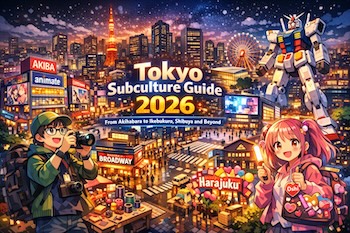
Tokyo in 2026 is no longer just a collection of famous shopping districts. It is becoming a layered cultural machine where anime, games, live events, character goods, film, music, DIY fandom, and immersive experiences are all being rebuilt in real time.
Some areas are growing through massive redevelopment. Others are gaining new life through official anime pilgrimages, creator-led projects, or fan communities that now have enough force to reshape the identity of an entire neighborhood. What makes this moment especially interesting is that each district is not evolving in the same way. Ikebukuro is deepening its role as a full-spectrum anime city. Nakano is being pulled between redevelopment and old-school subculture density. Shinjuku is accelerating as a city of celebration and immersion. Shibuya is becoming a world-facing anime storefront. Even places once treated as side routes now have their own clear personality.
This article reorganizes the latest 2026 research area by area and turns it into a single Tokyo-wide guide. The goal is not just to list events. The goal is to capture how each district feels now, what is actually changing, and why those changes matter for fans.
This article is an updated version of our previous guide, “Tokyo’s Otaku Geography: A Ground-Level Guide to Where Japanese Fan Culture Actually Exists.” Feel free to check that one out too!
Ikebukuro 2026
The Heartbeat of a Deepening Anime City
Ikebukuro in 2026 has moved beyond being just a district of shops. It is evolving into a huge all-direction anime base where people can buy, experience, and now even create content inside the city itself.
The biggest development is the planned arrival of Studio One Base in Sunshine City in autumn 2026. This enormous production hub, centered on the KADOKAWA group, is expected to occupy roughly 1,400 tsubo. That scale alone is enough to shift the meaning of Ikebukuro. Creators will be making works directly inside the district, while nearby stores and events reflect that output almost immediately. It is a rare model even on a global level, a kind of local production-and-consumption cycle for anime culture.
The former Ikebukuro Marui site has also entered a new phase as IT tower, opening in March 2026. A flagship-class Bic Camera presence gives the west side a renewed role as a digital and hobby destination. For a long time, the east side and Otome Road carried most of the otaku image. Now the west side is pushing back with a more electronics-and-hobby-driven identity.
Events have only reinforced that momentum. Animate Ikebukuro Main Store celebrated the third anniversary of its grand reopening in March 2026 with a large in-house Sakura Festival and frequent signings by popular creators. Its position as the world’s largest anime shop feels less like marketing language now and more like a visible urban fact.
At Sunshine City, the large-scale Detective Conan: Highway no Datenshi collaboration from April through June transformed the district yet again. The aquarium, the Tenbou Park observation area, themed cafés, mystery content, and even special sea lion performances turned the complex into an extended anime environment rather than a single pop-up.
March also brought TAAF2026, the Tokyo Anime Award Festival, centered around Ikebukuro HUMAX Cinemas. That gave the area something equally important: not just fandom traffic, but creator traffic. Fans, filmmakers, industry people, and international guests all converged in one district.
What stands out most when walking Ikebukuro in 2026 is that it no longer feels accurate to call it simply a women’s fandom district. The intensity is broader than that. With large exhibitions, a creator base under development, and major events like the upcoming One-Punch Man exhibition from June 2026, the district feels like anime has been built directly into the city’s infrastructure.
Witnessing the transformation of Ikebukuro into the world’s premier Anime City.
Nakano 2026
Redevelopment Noise and the Echo of Deep Subculture
Nakano in 2026 feels like a district caught in the middle of transformation. It is one of the clearest examples in Tokyo of a neighborhood where redevelopment is visible, physical, and impossible to ignore, yet the old subculture identity has not disappeared.
The biggest shift is the emergence of the new Nakano Station building and north-south free passage, scheduled for completion by the end of 2026. The large pedestrian route above the tracks is rewriting circulation across the district. What used to feel separated between the Broadway side and the south side is becoming newly connected, and accessibility is improving at the same time. That might sound technical, but for a district like Nakano, changes in movement change everything.
The old Nakano Sunplaza site has also entered a decisive stage. After years of debate, demolition has been formally set, and groundwork is now moving toward the future NAKANO Sunplaza City project, aiming for completion in 2034. A new music hall for around 5,000 people is part of that vision, giving the area a long-term entertainment axis beyond its retro subculture image.
In March 2026, the Nakano Station Area Platform was established as a public-private initiative involving the Nakano Broadway shopping district and other players. That matters because the question is no longer just how to rebuild space, but how to make new space feel like Nakano.
The second Nakano Short Film Festival Nakannu also helped redefine the area in March 2026. By screening works tied to Nakano Broadway, alleyway culture, and local shops, it framed Nakano itself as a site of cinematic meaning. There is also steady expansion outward, with places like Higashi-Nakano hosting events such as the planned October 2026 mystery bar event Halloween no Dokeshi.
Nakano has always thrived on a certain chaos. In 2026, the district looks slightly more aligned, slightly more ordered. But that actually makes the density of Nakano Broadway feel even stronger. As the station area grows cleaner, the subculture hidden deeper inside becomes more vivid by contrast. The district still feels like a place where anyone can fall in, but now it is also easier for newcomers to arrive.
The frontier of subculture remains deep, even as the skyline reaches for the future.
Shinjuku 2026
A Neo-Subculture Terminal of Celebration and Immersion
Shinjuku in 2026 feels like a permanent festival. It already had scale, retail strength, and traffic power, but now it has more places specifically built to give fans a reason to gather.
One key example is Annivroad, the new permanent celebration-themed store opened by Bushiroad Creative on the second floor of Shinjuku Marui Annex in January 2026. Starting with the tenth anniversary of BanG Dream!, it established a space where anniversaries themselves become the organizing principle. That is a smart shift. Instead of treating anime and game fandom as a stream of temporary campaigns, Shinjuku now has a place where milestone emotion is built into the retail model.
The growing presence of ONE PIECE BASE SHOP also matters. What started as a flagship retail point is now part of the district’s identity, with around 500 limited items and a treasure-hunt shopping mood that works for domestic fans and tourists alike.
Meanwhile, Kabukicho Tower continues to evolve as an immersion machine. Premium screenings at 109 Cinemas Premium Shinjuku and temporary attraction collaborations have made the area feel more event-driven, and the large Gintama collaboration in spring 2026 showed how film, food, and retail can be fused into one fan experience.
Shinjuku also gained sanrio house at Lumine Shinjuku in March 2026, a new lifestyle-oriented store designed around the idea of New Kawaii. That is significant because it expands the district’s subculture range beyond classic anime and game fans. There was also a SAKAMOTO DAYS pop-up at Shinjuku Marui Annex in April 2026, reinforcing the area’s role as a high-rotation destination for hot titles.
Another important trend is pilgrimage. With season three of Oshi no Ko, fans have been revisiting real-world locations around Shinjuku Sanchome, including spots like Kushikatsu Tanaka. That direct link between city and story has become more active again.
If Akihabara is still the city for concentrated shopping, then Shinjuku in 2026 feels like a place where emotions are shared. Fans gather here to celebrate anniversaries, react together, and enter worlds collectively. It is not just a buying district. It is a stage for fandom feeling.
Shinjuku: Where every day is an anniversary for fans.
Shibuya 2026
Redevelopment Fulfilled, and the Rise of the Urban Pop Anime City
Shibuya in 2026 has fully changed stages. It is no longer a place that occasionally hosts anime events. It has become a district where world-level anime content is constantly visible.
The clearest symbol of that shift is the permanent Aniplex Official Store that opened inside MEGA Don Quijote Shibuya in April 2026. With early and limited goods for titles like Demon Slayer and Bocchi the Rock!, it immediately turned into a major attraction point. Because it sits inside a location already central to tourist traffic, its impact on both domestic fandom routes and inbound routes is enormous.
At the same time, Shibuya Sakura Stage has been moving toward a full subculture identity. After its full-scale operation, the district hosted a large Sakura Miku collaboration in April 2026. The Yamaha site YSC Shibuya has also hosted experience-based events such as live participation sessions tied to Bocchi the Rock!, making Shibuya feel like a district where anime and music are actively performed, not simply displayed.
The district’s cultural range is broadening too. SHIBUYA XXI in Udagawacho is emerging as a hybrid venue for VTuber streams, acoustic live events, and anisong DJ culture inside a noh-inspired space. At Shibuya Parco, ONE PIECE CAFE GENE continued its draw after its February 2026 renewal. And at SHIBUYA109, the NEEDY GIRL OVERDOSE pop-up in April 2026 showed again how closely the district is linked to fashion subcultures such as jirai-kei and ryousan-kei.
What makes Shibuya different in 2026 is quality of experience. The district is not necessarily the deepest collector area, but it may be the strongest place in Tokyo for polished, globally legible, urban anime culture.
Shibuya: Where street culture and the anime world collide in 2026.
Tachikawa 2026
The Return of a Sacred Site and the Evolution of Ultimate Sound
Tachikawa in 2026 feels mature. Not quiet, not fading, but mature in the sense that its strengths are now obvious and established.
The most important moment this year was the Toaru Majutsu to Kagaku no Gensou Ongeki film concert in February 2026, held at TACHIKAWA STAGE GARDEN to close out the fifteenth anniversary of the Toaru franchise. The city treated it seriously, with coaster rallies and character stand displays across twelve shops around the station. For fans, Tachikawa once again felt unmistakably like Academy City.
The district also gained new visibility through Netflix’s Chou Kaguya-hime!, released globally in February 2026, with scenes carefully depicting Green Springs and the station area. That created a newer pilgrimage wave built on the district’s sleek, futuristic look.
Even local transit entered the character era with the debut of Tachikawa Bus’s official mascot Nyachikawa-san in April 2026. Character branding, wrapped buses, and goods have added another visual layer to the city.
But one thing still defines Tachikawa more than almost anywhere else in Tokyo: sound. Cinema City continued to sharpen its identity through its signature Gokujou Bakuen screenings, and in April 2026 introduced the independently developed 02 system. Special screenings such as REDLINE with director talk events, and full-series marathons like Bang Brave Bang Bravern in May, reinforced Tachikawa’s status as a city where sound is not a feature but a reason to visit.
Tachikawa in 2026 feels like a proud holy land that has aged well. Its connection to Toaru remains strong, but its broader identity rests on something even more durable: the idea that this city offers experiences that cannot quite be replaced elsewhere.
Tachikawa: A city where legendary stories and cutting-edge sound resonate.
Koenji 2026
The DIY Sanctuary Finds a New Beat Under Reorganization
Koenji in 2026 is not losing its DIY spirit. It is refining it.
The biggest physical change comes from the continuing development of the west side of Koenji Mashita, where tenant updates and spatial restructuring are improving walkability under the tracks. The key point is not that old Koenji is being erased. It is that the area is being adjusted into a shape where movement, workshops, and local-scale creativity can coexist more smoothly.
Another major shift arrived with the April 2026 relaunch of Za-Koenji, the municipal arts theater, under a new artistic director and a refreshed identity. The second-floor café also reopened as Maarui Café, adding another daily-use cultural node rather than a once-in-a-while destination.
Koenji’s event rhythm remains strong. The twentieth Koenji Festival planned for October 2026 is preparing its largest circulation-style programming yet, combining pro wrestling, mascots, local bookshops, and record-linked stamp rallies. The Koenji International Book Festival has also expanded the district’s identity as a paper-and-zine culture hub, especially through under-track book stalls and independent publishing events.
Meanwhile, anime café culture remains active through Machi Asobi CAFE and ufotable Cafe, where collaborations tied to Demon Slayer and newer series have kept fandom traffic steady.
What stands out in Koenji now is that it feels less like a district surviving on old chaos and more like a district actively cultivating culture. The difference matters. Koenji still has its own pulse, but the soil now feels more deliberately prepared.
Koenji: Where DIY spirit finds its new home under the railway.
Ueno 2026
The Kingdom of Treasure Hunting Meets the World of Art
Ueno in 2026 remains one of Tokyo’s most reliable full-direction hobby districts. It still has that feeling of being able to find almost anything somewhere, but now the district’s connection between hobby culture and formal art is getting stronger.
The symbolic center is still Yamashiroya, which continues to expand its role through highly active building-wide event programming. In spring 2026, it cycled from B-SIDE LABEL to PINGU POP UP STORE, while also using JR Ueno Station’s platform wall area for massive video content and photo spots. That kind of station-linked staging gives Ueno unusual visibility right at the threshold of arrival.
Another intriguing development is the way high art and subculture are starting to speak to each other. The planned Rembrandt exhibition at the National Museum of Western Art in summer 2026 is already inspiring nearby hobby retailers to prepare shadow-and-light themed figure displays and art-inspired anime goods. This is exactly the kind of cross-pollination Ueno can support better than almost anywhere else.
Around Ameyoko, game centers such as Taito Station and ADORES remain major prize battlefronts, with new One Piece, The Apothecary Diaries, and Gakuen Idolmaster prizes drawing both serious local players and inbound traffic. Meanwhile, the Hideko Tachikake exhibition at Yayoi Museum from April through June 2026 added another layer, connecting 1970s shoujo manga history with the district’s broader cultural memory.
Ueno is still a full-spectrum hobby town, but the pleasure of the district is increasingly intellectual as well as chaotic. It is the kind of place where you can fight crane games in Ameyoko and then walk into a museum to think about classical light, manga history, or illustration lineage.
Ueno: A grand intersection where historical art meets modern hobby culture.
Shimokitazawa 2026
A Settled Anime Holy Land and the Explosion of Experimental Pop Culture
Shimokitazawa in 2026 feels like a district where things that should clash somehow fit together. Bocchi the Rock!pilgrimage traffic has not faded. If anything, it has become more settled, more normalized, more international. At the same time, the district is filling with new experiments centered around Mikan Shimokita and the broader station redevelopment zone.
March 2026 marked four years of Mikan Shimokita, celebrated through the playful Jikkenchuu-ten event built around the idea of incomplete charm. That produced exactly the kind of absurdly Shimokita activities the area thrives on, from stairwell live performances to secondhand clothing contests.
The district is also pushing experimentation into comedy through the planned Shimokita www.2026 comedy festival, which uses ordinary retail sites such as shops and even Uniqlo as performance environments. That sort of mixed-use cultural play feels very natural here.
As for anime pilgrimage, Bocchi the Rock! remains central. Shimokitazawa SHELTER and the famous photo wall still attract fans from inside and outside Japan. The Village Vanguard wrapping campaign using a new illustration by Aki Hamaji in January 2026 reminded everyone that the connection is not nostalgia yet. It is still active. Community-led events like the second Shimokitazawa Bozaro Festival continue to deepen that local relationship.
Music also keeps the district alive through events like the June 2026 NiNiMu fes., a large-scale circuit event across eight venues including SHELTER. Shimokitazawa’s strength is that anime and music do not feel like separate lanes here. They overlap in the same streets.
This might be Tokyo’s best district for accidental discovery. You come for one thing, then a café, venue, wall, or small shop pulls you into something else.
Shimokitazawa: Where every alley tells a story of indie spirit and anime love.
Kichijoji 2026
Green Space, Creation, and Comfortable Otaku Life
Kichijoji in 2026 feels balanced in a way few Tokyo districts do. It is not trying to overwhelm. Instead, it keeps proving how well nature, fandom, workshops, and polished commercial space can coexist.
The Kichijoji International Animation Film Festival in February 2026 is a good example. By focusing this year on stop-motion animation and welcoming figures like PUI PUI Molcar director Tomoki Misato, it strengthened Kichijoji’s role as a creator-facing district rather than only a consumption zone. Workshops and public sessions made that even clearer.
The city also gained extra fan energy through Persona 5: The Phantom X, which turned Kichijoji Station into a major visual site with large station advertisements. The Persona 30th anniversary tie-ins with Keio Railway in February 2026 reinforced Kichijoji’s role as a real-world extension of game atmosphere.
The district continues to evolve through immersive hobby space too. The March 2026 opening of JOLDEENO Kichijoji Machinaka as a murder mystery and board game café added a strong new nighttime culture node. Character-focused retail remains active as well, with renewed family and push-activity appeal at Coppice Kichijoji, Loft, and pop-up activity around Sanrio and SWIMMER.
Kichijoji’s strength is variety. You can look at cherry blossoms, stop by anime exhibitions, fall into a tabletop scenario at night, and still feel like the district is coherent. It is less about concentrated obsession and more about a rich bundle of good cultural habits.
Kichijoji: A town where green spaces and creative stories breathe together.
Asakusabashi 2026
The Capital of DIY Oshi Culture
Asakusabashi in 2026 is no longer a side stop after Akihabara. For fans who want to customize, decorate, assemble, or hand-make support items for their favorite characters, this district is one of the strongest specialized bases in Tokyo.
The clearest demonstration of that power is Mono Machi 2026, held from May 22 to 24 across the Okachimachi, Kuramae, and Asakusabashi area. By 2026, the event has reached a point where workshops related to oshi activity parts are surging. Long-running wholesalers and traditional craft knowledge are now directly supporting fandom customization.
Another symbolic move is the concept-store activity at Asakusabashi UNI, where the fashion brand SEVESKIGlaunched a subculture-inflected Memories concept space from March 2026. That kind of development matters because it shows Asakusabashi is not just a wholesaler district. It is becoming a curated creative district too.
The area’s practical strength remains enormous. Kiwa Seisakusho and Parts Club keep adapting faster than most districts can react, turning social-media-prompted trends such as nuanced color pain-bag ribbons and custom smartphone shoulder fittings into immediate storefront inventory. That speed is part of why Asakusabashi feels like a real workshop base, not just a supply town.
There is also a growing lifestyle element. Events like Miniature Photo World Exhibition 2026 at TODAYS GALLERY STUDIO. have made the district a near-sacred zone for doll photography, figure setups, and display creators. Even local food, such as the talked-about gyutan katsu at Gyutan Biyori, is becoming part of fandom travel routes.
The strongest 2026 route may actually be the combined one. Buy the goods in Akihabara. Bring them to Asakusabashi. Make them yours.
Asakusabashi: The ultimate workshop where your oshi shines the brightest.
Harajuku 2026
Kawaii Rebuilt as an Immersive Media Zone
Harajuku in 2026 has moved beyond being a fashion district with occasional character events. Around Harakado and Omokado, it now feels like a media space where fashion, character IP, immersive installation, and creator culture all fire at once.
A major symbolic opening came in April 2026, when Kiddy Land Omokado Store launched as an 80th anniversary concept flagship dedicated to broadcasting Japanese Kawaii culture outward. Inside the same site, hololive production official shop in Harajuku expanded the district’s otaku appeal even further. Life-size figures and glasses-free 3D display systems turned it into more than a store. It became an experience point.
Harakado itself marked its second anniversary with the April 2026 Harakado Bunkasai, developed with Zipper to reinterpret 1990s street-snap culture. Meanwhile, the revived immersive venue KAWAII MONSTER LAND on Takeshita Street has made total sensory overload a permanent part of the district again.
Upcoming tentpole events like the Dragon Quest 40th Anniversary Exhibition are likely to push Harajuku even further into major IP territory, while THE HALL & TUNNEL under the renewed Harajuku Quest adds an art-experiment layer that links the district’s mainstream and underground faces.
What makes Harajuku special in 2026 is immersion. The district increasingly asks fans not just to look, but to enter.
Harajuku: A kaleidoscope of immersive culture and neon-colored dreams.
Machida 2026
West Akiba Grows Up and Becomes an Official Sacred Site
Machida in 2026 feels like a city that finally added emotional value to its long-standing practical strength. It has always been a strong shopping base, often called West Akiba, but now it has acquired a more official anime-pilgrimage identity too.
The biggest catalyst is the official recognition of Utagoe wa Mille-Feuille, modeled on Machida, as part of the 2026 edition of Anime Holy Land 88. That matters because it gives Machida something beyond convenience. It gives the city narrative legitimacy. Station deck visuals and city-supported branding have turned the district into an explicitly recognized pilgrimage zone.
The new Machida City Cultural and Artistic Town Development Plan launched in April 2026 also makes clear that local government now sees subculture and live music not as side effects but as growth assets. Events such as the voice-guided AR sightseeing rally based on the series have pushed the city further toward experiential pilgrimage.
At the same time, places like Animate Machida continue to strengthen their regional importance, with major campaigns such as LiSAnimate showing that Machida is no longer just an overflow shopping district. Outdoor events like Machida Otaku Culture Festival 2026 at Machida Shibahiro also suggest that the city is developing more visible public-facing otaku culture than before.
Machida in 2026 feels newly official. The practical base is still there, but now it carries atmosphere too.
Machida: Where the West Akiba spirit meets its new destiny as a sacred anime site.
Kamata 2026
Urban Storytelling and Handmade Fandom in One Place
Kamata in 2026 has become a highly comfortable district for mature fandom. It does not shout as loudly as some larger areas, but it offers something valuable: story atmosphere and making culture in the same walkable zone.
The biggest emotional driver this year has been Famiresu Iko., whose completion celebration took the form of the K-da Iko. event at Kumazawa Bookstore in Granduo Kamata in March 2026. That event, combined with the Kamata Shiyouze! campaign at Tokyu Plaza Kamata, let fans experience the district not just as a place that sells goods, but as the actual emotional space of a work.
Kamata’s second major strength is still Yuzawaya, which has become even more important for handmade push-activity workshops. Resin, beadwork, nui outfits, and acrylic stand cases are now part of a practical fan route, making Kamata sit surprisingly close to Asakusabashi in creative importance.
The area also retains subcultural depth through facilities like Ota City Industrial Plaza PiO, which continues to support genre-specific doujin events, and through smaller experiential events such as Homeru Bar, which briefly turned fandom self-affirmation into a physical retail experience.
Kamata now feels like a district where you can do pilgrimage, buy parts, make things, and enjoy a more adult pace of city otaku life.
Kamata: A place where raw urban stories and the joy of creation intertwine.
Odaiba 2026
The Bay Area as a Festival Ground for Giant IP
Odaiba in 2026 is pure scale. More than almost anywhere else in Tokyo, it turns beloved IP into spatial spectacle.
The headline is Pokémon GO Fest: Tokyo, taking place from May 29 to June 1, 2026, centered on Odaiba Seaside Park and spanning a huge multi-ward area. Because 2026 marks the tenth anniversary of Pokémon GO, the emotional scale matches the physical one. Odaiba becomes a giant mixed reality stage where digital and coastal urban space fuse.
Another major development is TOKYO DREAM PARK, launched in the Ariake-Odaiba zone with 100% Doraemon & Friends as its opening attraction. With over one hundred Doraemon figures installed, the site is built almost like a mega-scale photo engine.
At The Gundam Base Tokyo, the evolution of Gunpla Battle into a scan-and-control digital system continues to turn childhood fantasy into tangible experience. Events like Odaiba Itasha Tengoku 2026 SPRING and the increasingly entertainment-oriented Niku Fes 2026 reinforce the district’s atmosphere of mass-scale themed celebration.
Odaiba in 2026 feels like a district where your favorite things are not simply represented. They are celebrated at full city-block volume.
Odaiba: A grand stage where digital dreams become a sea-breeze reality.
Mitaka 2026
Animation’s Sanctuary and the New Crossing of Digital and Real Communities
Mitaka in 2026 feels calm, but not static. It is one of the clearest examples in Tokyo of a district where major cultural legacy and newer creative communities can breathe in the same environment.
The annual Mitaka no Mori Anime Festa 2026 once again highlighted that balance. The Indies Animation Festawelcomed experimental works, including AI-and-hand-drawn hybrid pieces, while the accompanying Animation Across Time screenings curated by the Ghibli Museum extended the district’s role as both archive and incubator.
A smaller but meaningful change came through the spread of LOGet! CARD tourism culture, with several Mitaka landmarks becoming collectible circuit points. The result is that anime-adjacent tourism here feels more intentionally structured than before.
The district’s core draw, of course, remains the Ghibli Museum, which in 2026 continued rotating short films such as Boro the Caterpillar, Koro’s Big Walk, and Mei and the Kittenbus. That constant renewal is part of what keeps Mitaka special. Even repeat visits retain discovery.
At the same time, new community types are appearing. Pilgrimage traffic tied to the TBS drama Mirai no Musuko has increased around Shinagawa Park-area locations, and even VRChat users have begun treating Inokashira Park as a site for real-world gatherings linked to virtual environments.
Mitaka’s charm is not in speed. It is in the feeling that culture here is allowed to grow at human pace.
Mitaka: A sanctuary where animation breathes and new stories take root.
Chofu 2026
Cinema, Yokai, and Tokusatsu Memory in One District
Chofu in 2026 is one of Tokyo’s richest districts for people who care not just about fandom consumption, but about the craft and history behind it.
The annual Chofu Cinema Festival 2026 again proved how strong the district is at treating film culture as a civic identity. Special screenings of works such as GeGeGe no Kitaro: Daikaijuu and Gamera 3, alongside talks by tokusatsu art staff, reminded visitors that Chofu is not only a place where films are shown, but a place where film-making knowledge still matters.
The relocated Kitaro Chaya near Chofu Station and Tenjin-dori Shopping Street has also shifted the district’s atmosphere. By moving closer to the station from Jindaiji, the route into GeGeGe pilgrimage culture has become easier and more everyday. Combined with the 2026 GeGeGe Gallery exhibitions and the continuing presence of monster-shaped objects in the shopping street, Chofu now lets fans enter yokai culture more casually than before.
Events like World Trigger Festival 2026 and the continuing appeal of riverside open-air cinema on the Tama River expand that identity beyond a single franchise. Chofu in 2026 feels cinematic in both content and movement. You can watch something, walk into its history, and then step into its real-world echoes.
Chofu: A cinematic haven where legendary monsters and film-making spirits reside.
Tokyo 2026 Overall
What These Districts Reveal About the New Shape of Otaku Culture
What Tokyo shows in 2026 is not one single model of subculture growth. It shows many.
Ikebukuro is becoming a vertically integrated anime city where production, retail, and events are starting to feed one another directly. Nakano is proving that redevelopment does not automatically erase subculture, though it changes the way that subculture is encountered. Shinjuku is building a city of anniversary emotion and shared experience. Shibuya is increasingly global-facing, polished, and premium. Tachikawa is refining the importance of hyper-specific experiences like sound. Asakusabashi and Kamata remind us that making things is still a core part of fandom life. Harajuku shows how kawaii and immersive IP culture can become media architecture. Mitaka and Chofu show that slower districts can still hold extraordinary cultural weight.
If there is one keyword tying these places together, it may be this: experience.
Tokyo’s subculture map in 2026 is no longer organized only by where you can buy something rare. It is organized by where you can feel something specific. Celebrate. Build. Listen. Immerse. Remember. Wander. Compare old and new. Enter the story. Step back out. Then go to another district and feel a different version of it.
That is why a Tokyo otaku guide now has to be district-specific. The city is no longer one giant fandom mass. It is a network of sharply defined cultural environments.
And that is exactly what makes it fun.

Kumao’s View 2026
Walking Tokyo in 2026, what strikes me most is that the city has stopped treating anime and otaku culture like temporary decoration. In many districts now, it feels built into the operating system. Some areas do that through huge corporate development. Others do it through shopping streets, workshops, music venues, or museum-scale cultural memory. But the result is the same. Fandom has become city texture.
Tokyo used to feel like a place where you chased events.
Now it increasingly feels like a place where the city itself is the event.
Written by Kumao
Tokyo in 2026 is no longer just a capital of consumption. It is a capital of layered fandom experience.
Quotation and reference
I quoted and referred to the information from this article.
We deeply consider and experience Japanese otaku culture!
|akihabara.site Official
All Write: Kumao